WSOP 2026 $50K Poker Players Championship Preview: 9 Games, 1 Trophy, and the Hardest Bracelet to Win
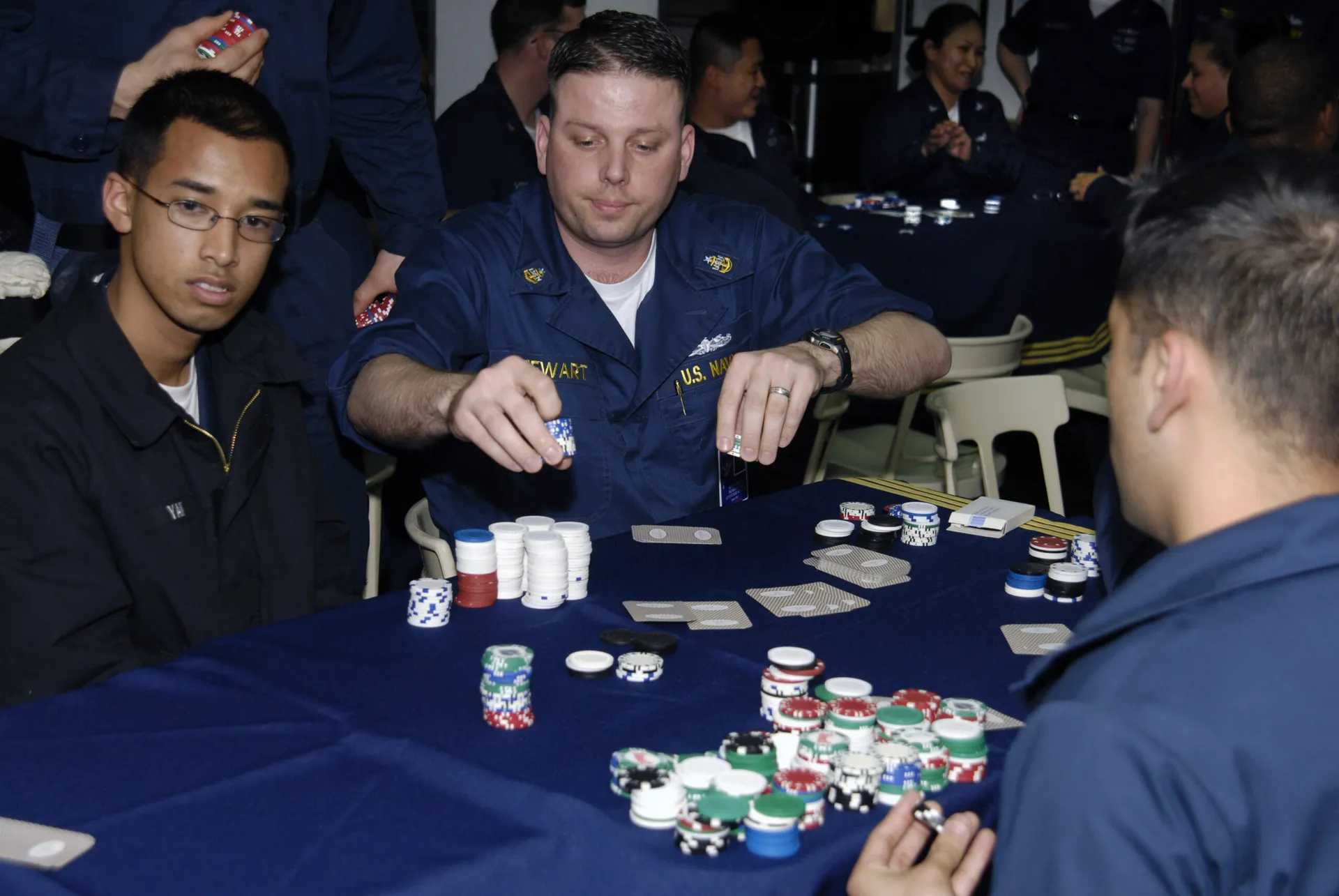
The 16th annual $50,000 Poker Players Championship kicks off June 25 at the WSOP, and it remains the single most demanding bracelet event on the schedule. Nine different poker disciplines, a field full of all-around killers, and the Chip Reese Memorial Trophy waiting at the end. If you only follow one high-roller event this summer, make it this one.
I’ve watched a lot of poker tournaments over the years. Thousands, probably. And every summer, when people ask me which WSOP event actually separates the great players from the merely good ones, the answer hasn’t changed once: it’s the Poker Players Championship. Not the Main Event. Not the $250K Super High Roller. The PPC.
This year marks the 16th edition of the event, and I’m writing this preview because I genuinely believe most poker fans — even serious ones — underestimate how wild this tournament is. You can’t satellite into it, you can’t play tight and wait for good spots in one game, and you absolutely cannot fake your way through nine different poker variants. It’s the ultimate test, and the field knows it.
What is the Poker Players Championship?
The Poker Players Championship is a $50,000 buy-in mixed-game event at the World Series of Poker. It rotates through nine different poker disciplines, changing the game every time the level increases. The winner takes home the Chip Reese Memorial Trophy — named after the legendary Chip Reese, widely considered one of the most versatile cash game players in poker history, who won the inaugural event in 2006 and passed away in 2007.
The trophy itself is a big deal. In the WSOP hierarchy, only three awards carry real prestige beyond the gold bracelet: the Main Event champion’s bracelet, the Player of the Year leaderboard, and the Chip Reese Memorial Trophy. The PPC winner gets both the bracelet and the trophy, which is why you’ll see players who have no financial reason to play a $50K event registering anyway. It’s about legacy.
Buy-in for the Poker Players Championship — the highest-stakes mixed-game event at the WSOP, running since 2006
The event typically draws between 60 and 120 entries. That’s tiny by WSOP standards — the Main Event gets 9,000+ — but don’t let the small field fool you. The player pool is absurdly stacked. You’re looking at a room full of mixed-game specialists, high-stakes cash game regulars, and poker legends who’ve been grinding these formats for decades. There are no soft spots.
The 9 disciplines: a crash course for the uninitiated
This is where the PPC gets interesting — and where most Hold’em-only players’ eyes glaze over. The tournament cycles through nine distinct poker games. If you’re unfamiliar with any of them, here’s your cheat sheet.
| Discipline | Format | Quick Description |
|---|---|---|
| No-Limit Hold’em | No-Limit | The one everyone knows. Two hole cards, five community cards, bet any amount at any time. The bread and butter of modern poker. |
| Pot-Limit Omaha (PLO) | Pot-Limit | Four hole cards, must use exactly two. Maximum bet is the size of the pot. Action-heavy, high-variance, and beloved by gamblers. This is the game that’s been eating into Hold’em’s market share for years. |
| Razz | Fixed-Limit | Seven-card stud, but the lowest hand wins. Ace is always low. The best possible hand is A-2-3-4-5 (a “wheel”). Sounds simple until you’re staring at five cards trying to remember if your opponent’s door card was a 3 or a 4. |
| Seven Card Stud | Fixed-Limit | The game your grandparents played. No community cards — each player gets seven cards (three down, four up). Reading your opponents’ exposed cards is everything. Memory and observation matter more here than in any other game. |
| Seven Card Stud Hi-Lo (8 or Better) | Fixed-Limit | Same as regular Stud, but the pot splits between the best high hand and the best qualifying low hand (8-high or lower). Getting “scooped” — losing both halves — is the worst feeling in poker. |
| Omaha Hi-Lo (8 or Better) | Fixed-Limit | Four hole cards, five community cards, pot split between high and low. The math gets complicated fast. You need to be thinking about both halves of the pot on every street, and the best players are constantly freerolling lesser opponents. |
| 2-7 Triple Draw | Fixed-Limit | Five cards, three drawing rounds, lowest hand wins. Straights and flushes count against you, aces are always high. The best hand is 2-3-4-5-7 (hence the name). Positional advantage is enormous in this game because you act last on every draw. |
| No-Limit 2-7 Single Draw | No-Limit | Same lowball rules as Triple Draw, but you only get one draw — and there’s no bet limit. This is the game that produces the most dramatic hands in mixed events. One draw, massive pots, and a ton of bluffing. It’s essentially pure poker. |
| Limit Hold’em | Fixed-Limit | Same as No-Limit Hold’em, but with fixed bet sizes. This was THE game before the poker boom made NLHE dominant. It rewards patience and precise hand reading over aggression and big bluffs. |
If you only play No-Limit Hold’em, here’s the reality check: that’s one-ninth of this tournament. You could be the best NLHE player in the world and still get destroyed in the other eight games. The PPC isn’t about being great at one thing — it’s about having no catastrophic weaknesses across nine very different skill sets.
I tried playing a mixed-game tournament once — a small $100 buy-in event at a local casino that rotated through just five games. I thought my Hold’em skills would carry me. I was wrong. I got absolutely demolished in the Stud rounds because I couldn’t track the exposed cards, and the 2-7 Triple Draw portion felt like I was playing blind. That experience gave me a deep respect for anyone who can compete at the PPC level. These players aren’t just good at poker; they’re good at all the pokers.
Why the PPC is the hardest tournament in poker
I don’t say this lightly. There are bigger buy-in events ($250K, $300K super high rollers). There are harder fields in specific games (the $10K PLO Championship, for instance, is brutal). But no single tournament tests the full breadth of poker skill like the PPC does.
Here’s why:
- No hiding spots: In a single-game tournament, you can compensate for skill gaps with tight play and patience. In the PPC, you face nine different games — your weaknesses will be found and exploited.
- Field composition: The $50K buy-in acts as a filter. You won’t find recreational players stumbling in from a satellite. Everyone at the table has put up fifty grand because they believe they can compete across all nine games.
- Format shifts: Each game requires different strategic frameworks. The mental flexibility to switch from no-limit aggression to fixed-limit Stud patience to lowball drawing strategy — sometimes within the same level — is extremely taxing.
- Memory and observation: The Stud variants require tracking folded cards. The draw games require reading draw patterns. And you have to do all of this while simultaneously adjusting to each opponent’s tendencies in each specific game.
- Endurance: The event runs over multiple days. By Day 3 or 4, mental fatigue becomes a real factor — and that’s when the game rotations hit hardest.
Phil Ivey once called the PPC “the one tournament that truly shows who the best all-around poker player is.” Coming from a guy who’s won 10 bracelets across multiple disciplines, that means something.
Who are the favorites for 2026?
If you ask me who’s going to win, I’d put my money on someone from the usual mixed-game elite — but honestly, predicting a PPC winner is harder than predicting any other tournament because the field is so strong and so evenly matched.
That said, here are the names I’m watching:
Michael Mizrachi (3x PPC champion) — The only player to win the PPC three times (2010, 2012, 2018). “The Grinder” has a game that’s perfectly suited for mixed events: patient, adaptable, and ruthlessly exploitative. He’s been quieter in recent years, but the PPC is his tournament. He always seems to show up for this one, and writing him off would be foolish.
Brian Rast (2x PPC champion) — Won in 2011 and 2016. Rast is one of the most well-rounded players in the game and has historically crushed mixed-game events. He tends to fly under the radar compared to flashier names, which is exactly how he likes it.
Dan Zack — Won the 2019 PPC and has been a consistent force in mixed-game tournaments. His understanding of the draw games and Stud variants is exceptional, and he’s the kind of player who doesn’t make expensive mistakes in his weaker games — which is half the battle in a nine-game format.
Shaun Deeb — Two-time WSOP Player of the Year with bracelets across multiple formats. Deeb is aggressive, opinionated, and dangerously good at finding edges in games where his opponents are uncomfortable. He’s been working on his Stud game in particular over the past couple of years.
Daniel Negreanu — Kid Poker is always a factor in mixed events, and his 2026 WSOP run has already been… interesting. More on that in a moment.
The Negreanu storyline: from bust to 789K in PLO
You cannot write a 2026 WSOP preview without mentioning what happened to Negreanu on Day 22. He was playing the PLO event — one of the most volatile formats in tournament poker — and busted on literally the first hand. First hand. The kind of exit that would make most players silently close their laptop and pretend it never happened.
Negreanu? He walked back to the registration desk, put up another bullet, and proceeded to grind his way to a 789,000 chip bag by the end of the day. That’s the kind of resilience that makes him dangerous in a multi-day event like the PPC. You can never count him out, no matter what happens early.
Chips bagged by Negreanu after re-entering the PLO event — having busted on the very first hand of his initial entry
The PLO game in the PPC will be his chance to ride that momentum. And if there’s one thing I’ve learned from watching Negreanu over 20 years, it’s that he thrives on narrative arcs. He loves being the comeback kid. Whether that actually helps him play better or just makes for better TV, I’m honestly not sure — but the story is there either way.
Calvin Anderson’s quiet Razz dominance
Here’s an under-the-radar storyline that the mixed-game community is very aware of even if casual fans aren’t: Calvin Anderson is going for a repeat title in the standalone Razz event, and his Razz game is absolutely terrifying.
For the PPC specifically, this matters because Razz is one of the nine rotations. If Anderson enters the PPC (and he likely will — he’s a regular in the high-buy-in mixed events), he’ll have a massive edge every time the format flips to Razz. In a tournament where advantages are razor-thin, having one discipline where you’re genuinely a level above the field can be the difference between making the final table and busting on Day 2.
Anderson is the kind of player who doesn’t generate headlines or social media controversy. He just shows up, plays extremely well, and quietly adds to his resume. If I were building a fantasy team for the PPC, he’d be one of my first picks — and he’d be significantly underpriced compared to the more famous names.
What to watch for during the event
If you’re planning to follow the PPC on the livestream or social media updates, here are the things I’d pay attention to:
The 2-7 Single Draw levels. This is where the biggest swings happen. It’s no-limit, there’s only one draw, and the bluffing frequency is through the roof. When two world-class players go to war in NL 2-7, the pots get enormous and the decisions get incredibly complex. Some of the most memorable PPC hands in history have come from Single Draw rounds.
The Stud levels in the late stages. By Day 3 and Day 4, when the field is down to two or three tables, the Seven Card Stud and Stud Hi-Lo rotations become fascinating. With fewer players, card removal effects become more significant — if you can see that three of the four Kings have been dealt to other players, the information advantage is huge. The best Stud players will weaponize this.
Who’s struggling in which game. Every PPC has at least one moment where a big-name player clearly looks out of their depth in a particular discipline. Watch for the body language shifts when the game changes — some players visibly deflate when they hear “next game: Razz” or “next game: 2-7 Triple Draw.” That’s information, even for us spectators.
The chip counts at game transitions. Smart PPC players manage their stacks around the game rotations. If you’re weak at Razz but strong at PLO, you want to arrive at the PLO rounds with enough chips to make your edge count. The strategic layer of stack management across nine different games is something that doesn’t exist in any other tournament.
Understanding bubble dynamics in tournament poker is always important, but in the PPC it takes on an extra dimension — you need to know not just when the bubble is approaching, but which game you’ll be playing when it hits. Getting caught in a weak game near the money bubble is a nightmare scenario that experienced PPC players actively try to avoid through early chip accumulation.
Past PPC champions: a hall of fame roster
Looking at the list of past winners tells you everything you need to know about the quality of this event:
- Chip Reese (2006) — The inaugural champion and the player the trophy is named after. Won the very first PPC and cemented its prestige before passing away the following year.
- Freddy Deeb (2007) — Lebanese-American mixed-game specialist who took down the second edition.
- David Bach (2009) — One of the most respected cash game players in Bobby’s Room at the time.
- Michael Mizrachi (2010, 2012, 2018) — The three-time champion and the player most synonymous with the event.
- Brian Rast (2011, 2016) — Two-time winner with one of the best all-around games in poker.
- Matthew Ashton (2013) — A British player who proved the PPC isn’t just an American event.
- John Hennigan (2014) — “Johnny World” — one of the all-time mixed-game greats. His 2014 PPC win was considered long overdue.
- Mike Gorodinsky (2015) — Former WSOP Player of the Year.
- Elior Sion (2017) — Known primarily as a high-stakes NLHE crusher, his PPC win surprised some people and proved his versatility.
- Dan Zack (2019) — The most recent “first-time” champion before the pandemic disrupted the schedule.
That’s a list of players who collectively hold dozens of WSOP bracelets across virtually every poker discipline. The PPC doesn’t attract tourists — it attracts the players who other players are afraid to sit with.
My prediction (take it or leave it)
I’m going to go out on a limb here. If you ask me who’s going to win, I’d put my money on Shaun Deeb. Not because he’s the most skilled mixed-game player in the field — Mizrachi, Rast, and Hennigan all have stronger resumes — but because Deeb plays with an aggression level that I think suits the current meta of mixed-game tournaments. The old-school approach of playing tight and waiting for premium spots in each game has been gradually losing ground to players who can apply pressure across all nine formats.
Deeb does that better than almost anyone. He’ll accumulate chips in the games where he has edges and fight tooth and nail to minimize losses in the games where he doesn’t. Plus, his ego won’t let him play passively — and in a tournament where aggression is increasingly rewarded, that stubbornness becomes an asset.
But honestly? Picking a PPC winner is a fool’s errand. The variance across nine games over multiple days is enormous. Someone like Mizrachi could win his fourth and become the undisputed PPC GOAT. Anderson could ride his Razz dominance to a bracelet. Even Negreanu, coming off that insane PLO Day 22 run, has the kind of momentum and mixed-game experience to make a deep run.
That’s what makes the PPC appointment viewing. You genuinely don’t know what’s going to happen.
The ICM factor in a small-field $50K event
One thing that gets overlooked in PPC coverage is the ICM dynamics. With a small field (typically 60-120 players) and a $50,000 buy-in, the pay jumps are significant in both absolute and relative terms. A min-cash might be $80,000-$100,000, while first place is typically $1.5M-$2M+.
This creates interesting strategic situations, especially on the bubble and at the final table. Players with shorter stacks face real pressure to ladder up, while big stacks can leverage their position aggressively — particularly in the no-limit rounds (NLHE and NL 2-7 Single Draw) where they can put opponents to the test for their entire tournament life.
If you want to understand how these dynamics work in practice, the ICM calculator is a useful tool for modeling final table scenarios. Plug in the stack sizes and payouts, and you’ll see why some “obvious” calls become folds when the pay jumps are this large.
Common Questions
What is the Poker Players Championship?
The Poker Players Championship is a $50,000 buy-in mixed-game tournament at the WSOP that rotates through nine different poker disciplines: No-Limit Hold’em, Pot-Limit Omaha, Razz, Seven Card Stud, Seven Card Stud Hi-Lo, Omaha Hi-Lo, 2-7 Triple Draw, No-Limit 2-7 Single Draw, and Limit Hold’em. First held in 2006, it awards the Chip Reese Memorial Trophy to the winner and is widely considered the truest test of all-around poker skill at the WSOP.
How many poker games are played in the PPC?
Nine. The tournament rotates through No-Limit Hold’em, Pot-Limit Omaha, Razz, Seven Card Stud, Seven Card Stud Hi-Lo, Omaha Hi-Lo, 2-7 Triple Draw, No-Limit 2-7 Single Draw, and Limit Hold’em. The game changes at every new level, so players must be proficient in all nine formats to compete effectively.
Who has won the most PPCs?
Michael “The Grinder” Mizrachi holds the record with three PPC victories (2010, 2012, and 2018). Brian Rast is the only other player with multiple wins, having taken the title in 2011 and 2016. No other player has won the event more than once.
When does the 2026 Poker Players Championship start?
The 16th edition of the PPC is scheduled to begin on June 25, 2026, at the WSOP in Las Vegas. The event typically runs over four to five days, with the final table usually taking place on the last day.
Sources: PokerNews WSOP 2026 Coverage, WSOP.com official schedule, historical PPC results via Hendon Mob database