Poker Tournament Bubble Strategy: How to Play When the Money Is Close
The bubble is the single highest-leverage moment in any tournament. Big stacks should attack relentlessly, short stacks need disciplined push/fold math, and medium stacks must resist the urge to play “safe” poker that bleeds them dry.
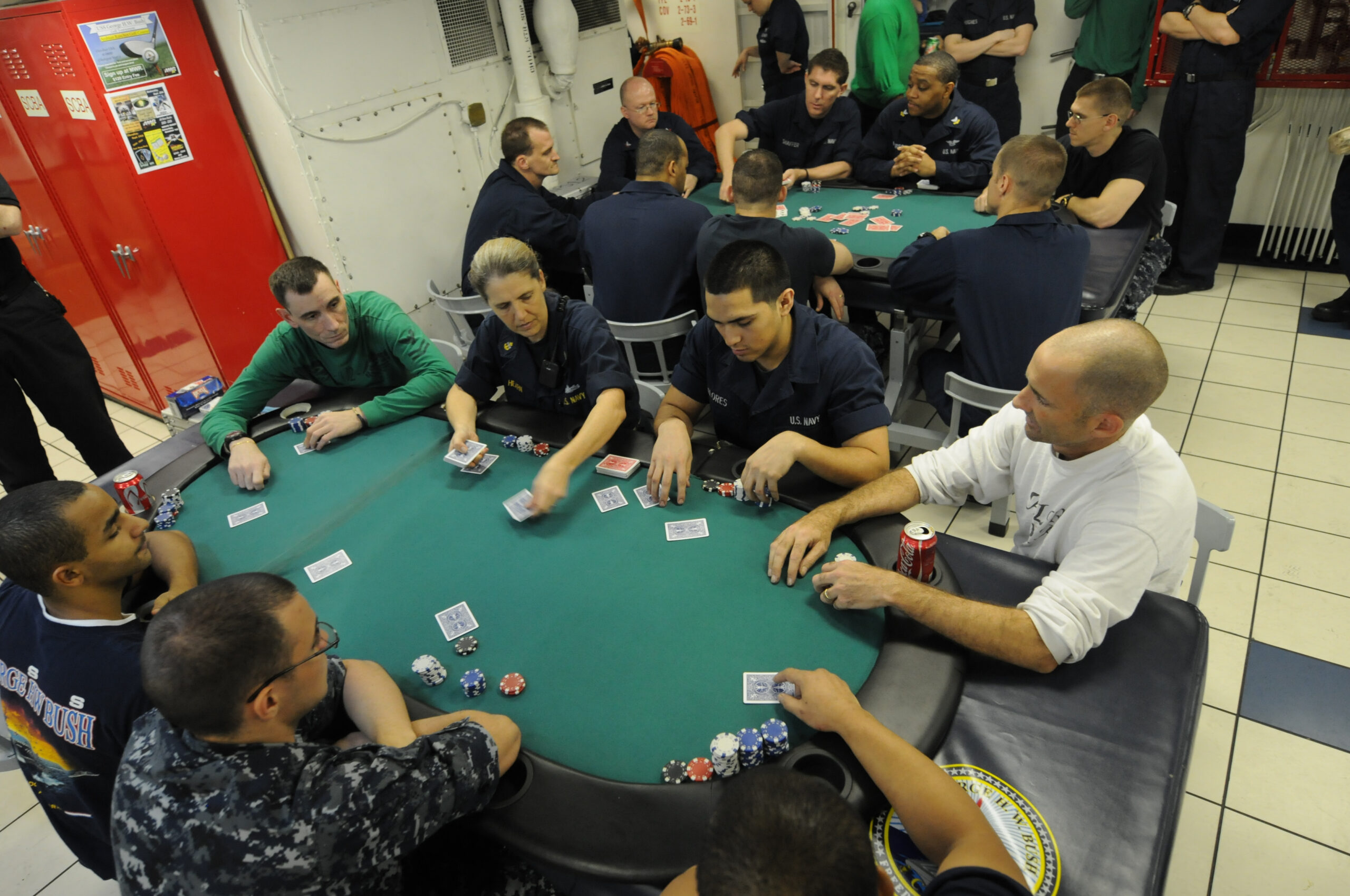
I’ve been on both sides of the bubble — the guy sweating every chip, and the guy with a monster stack bullying the table into submission. After six years of grinding tournaments, including a 134th-place finish at the WSOP and a deep run at WPT Borgata, I can tell you this: more money changes hands during the bubble than at any other point in a tournament.
This isn’t about getting lucky. It’s about understanding the math, reading the table dynamics, and having the guts to make the right play when everyone else is terrified.
Let’s break it all down.
What Is the Bubble in a Poker Tournament?
The bubble is the phase right before the money kicks in. If a tournament pays 100 players and there are 101-110 left, you’re on the bubble. The person who finishes 101st gets nothing. The person who finishes 100th gets their buy-in back (or more).
That gap — between zero and something — creates massive pressure. And pressure creates mistakes. Your job is to exploit those mistakes while avoiding your own.
Here’s what makes the bubble unique: survival has real dollar value. In cash games, every chip is worth exactly face value. On the bubble, your last chip is worth dramatically more than your first chip. This concept is called ICM (Independent Chip Model), and it’s the foundation of everything I’m about to tell you.
Think about it this way. If you have 30 big blinds on the bubble of a 500-player tournament, those chips represent maybe $3,200 in equity. Double up to 60 big blinds? Your equity jumps to maybe $4,800 — not $6,400. Lose them all? You drop to $0. The math is asymmetric, and that asymmetry drives every bubble decision.
Why Is Bubble Play So Important for Your ROI?
Most recreational players think the money is made at the final table. They’re half right. The final table is where the big payouts happen, but the bubble is where your long-term ROI is built or destroyed.
Here’s why: the bubble happens in every single tournament you play. You’ll reach a final table maybe 1-2% of the time. But if you’re a decent player, you’ll be in bubble territory in 30-40% of your tournaments. That’s hundreds of bubble situations per year if you’re putting in volume.
Small edges on the bubble compound fast. Picking up blinds and antes three extra times during a bubble phase can add 5-8 big blinds to your stack — chips that give you a real shot at the final table instead of limping into the money with 6 big blinds and praying.
If you want to understand the math behind why certain bubble plays have positive expected value, check out our EV mental math guide — it’ll change how you think about every decision.
How Should Big Stacks Play the Bubble?
If you have a big stack on the bubble, congratulations — you have a license to print money. Here’s how to use it.
Attack the medium stacks, not the short stacks
This sounds counterintuitive. Shouldn’t you go after the weak? Not exactly. Short stacks are desperate and will shove with a wide range. They’ve accepted risk. Medium stacks are the ones who are scared. They have enough chips to make the money if they fold for 20 minutes, and that’s exactly what most of them plan to do.
When you open-raise from late position and a medium stack is in the blinds, they’re folding an absurdly wide range. They’re folding K♠J♥. They’re folding A♦8♣. Hands they’d normally 3-bet or defend with — gone. They’re handing you free chips.
On the bubble, raise sizing matters more than your cards. Open to 2-2.2x instead of your usual 2.5x. You risk less to steal the same blinds and antes, and medium stacks fold just as often to a smaller raise. Over 30 hands of bubble play, the savings add up to 3-5 big blinds.
Target the right players at the right time
Not all medium stacks play scared. The guy who’s been 3-betting all tournament isn’t suddenly going to fold everything. Focus your aggression on:
- Players checking their phone — they’re already mentally cashing
- Players who haven’t voluntarily entered a pot in 2+ orbits — they’re in survival mode
- Players who look physically uncomfortable — bubble stress is real
- Players at other tables with medium stacks — if you’re in a multi-table bubble, these players can’t see what you’re doing
Know when to stop
Bubble aggression doesn’t mean open-shoving every hand. If someone plays back at you, respect it. A medium stack who 3-bets you on the bubble almost always has a premium hand. They’re not bluffing — they gave up their survival strategy to fight back. Give them credit and move on to an easier target.
How Should Short Stacks Survive the Bubble?
This is where most players get it completely wrong. They think being short-stacked on the bubble means folding everything and praying. That’s the fastest way to bubble.
The push/fold reality
With under 15 big blinds, your only moves are push or fold. No limping. No min-raising. No “seeing a flop.” Every chip you leak to a limp or a small raise is a chip you can’t use as leverage in a shove.
Your shoving range from late position with 10 big blinds should include:
- Any ace (yes, even A♣2♥)
- Any two broadway cards
- Any pocket pair
- Suited connectors down to 7♠6♠
- Any king with a suited kicker above 5
That’s a much wider range than most players think. But the math is clear: shoving with K♦7♦ from the button when the blinds are tight is significantly better than folding and losing another orbit of blinds.
Use our ICM calculator to run bubble scenarios before you play. Plug in realistic stack distributions and see how wide your shoving range needs to be. You’ll be shocked at how often shoving “junk” is mathematically correct.
ICM pressure works both ways
Here’s the thing most short stacks miss: you have ICM pressure too — just in a different direction. When you shove, medium stacks can’t call you light. They need a very strong hand to risk a significant chunk of their stack calling your all-in, because losing that pot could knock them from comfortable-to-cash down to short stack panic zone.
This means your shoves get through at a much higher rate on the bubble than at any other point in the tournament. A shove that might get called 35% of the time normally might only get called 15-20% of the time on the bubble. That’s an enormous difference in fold equity.
What Should Medium Stacks Do on the Bubble?
Medium stack bubble play is the hardest spot in tournament poker. I’m not exaggerating. You can’t bully like the big stacks, and you can’t shove with impunity like the short stacks. You’re stuck in no-man’s land.
Here’s how to navigate it.
Don’t just fold into the money
The biggest leak I see in medium-stack bubble play is extreme passivity. Yes, you want to cash. But folding every hand for 30 minutes costs you 4-6 big blinds in antes and blinds, which can drop you from “comfortable medium stack” to “desperate short stack” before the bubble even bursts.
Pick your spots carefully
You’re not going to war with J♠9♥ on the bubble with a medium stack. But you should still:
- Defend your big blind against obvious steals — if the big stack has opened 8 of the last 10 hands from late position, they don’t always have it. A 3-bet shove with a reasonable hand (any pocket pair, A♠T♣+, K♠Q♥) will get through often enough.
- Open-raise when the big stacks aren’t in the blinds — if there are two short stacks in the blinds, they probably can’t call. Raise with your normal range.
- Avoid marginal all-in confrontations — calling an all-in from a short stack with A♥J♦ might seem fine, but the ICM cost of losing can be brutal. Only call all-ins with the top of your range.
The sweet spot
Your goal as a medium stack is to steal 2-3 pots per orbit without ever putting your tournament life at risk. Small ball. Controlled aggression. Think of it like a surgeon, not a wrecking ball.
Big Stack vs. Medium Stack vs. Short Stack: A Quick Comparison
| Factor | Big Stack (40+ BB) | Medium Stack (20-40 BB) | Short Stack (<20 BB) |
|---|---|---|---|
| Primary Goal | Accumulate chips; exploit ICM pressure | Maintain stack; pick selective spots | Find a spot to shove and double up |
| Open-Raise Frequency | Very high (40-50% of hands in LP) | Moderate (25-30% in LP, tighter in EP) | Push/fold only — no open-raises |
| Calling All-Ins | Wide — you can afford the loss | Very tight — ICM cost is huge | N/A — you’re the one shoving |
| Target Players | Medium stacks in the blinds | Short stacks and other scared mediums | Tight big blinds, absent players |
| Biggest Mistake | Not being aggressive enough | Folding into the money with a shrinking stack | Calling off instead of shoving first |
| Risk Tolerance | High — you survive most coolers | Low — every big pot is dangerous | All-or-nothing on every hand you play |
Common Bubble Mistakes That Cost You Money
Flatting instead of shoving with a short stack
I see this constantly. A player with 12 big blinds picks up A♠Q♦ and min-raises. The big blind calls. The flop comes K♥7♣3♠. Now what? You’ve invested 2.5 big blinds, you missed the flop, and you’re in a guessing game.
The fix: With 15 BB or less, it’s push or fold. A♠Q♦ is a slam-dunk shove from any position. You either win the blinds uncontested or flip for a double-up. Both outcomes are better than the min-raise-and-pray line.
Calling an all-in with a medium hand and a medium stack
A short stack shoves 10 BB from the cutoff. You’re in the big blind with K♠J♥ and 25 big blinds. Seems like an easy call, right? Wrong.
In a cash game, this is a snap-call. On the bubble, calling and losing drops you to 15 BB and puts you in the danger zone. The ICM cost of that potential loss far outweighs the chip EV gain. Fold and let someone else deal with it — or wait for a stronger hand.
Not adjusting to table dynamics
Your strategy should change based on who’s at your table. If you have two huge stacks on your left who are actively bullying, tighten up — you don’t want to open into them. If the big stacks are passive (it happens), widen your range and pick up the slack.
The fix: Spend the first 5 minutes of the bubble observing. Who’s opening wide? Who’s folding everything? Adjust your strategy accordingly. This is a key difference between tournaments and cash games — in cash games, you can reload. Here, table awareness is survival.
Playing to min-cash instead of playing to win
The min-cash in a $200 tournament might be $300. The first-place prize is $15,000. If your entire bubble strategy is designed around locking up that $300, you’re leaving thousands of dollars on the table over your career.
Yes, cashing matters. But building a big stack through the bubble matters more. The player who enters the post-bubble with 50+ big blinds has a significantly better chance of reaching the final table than the player who limped in with 8 big blinds.
Real-World Bubble Hand Examples
Theory is great, but let’s see how this plays out in actual hands. These are situations I’ve either faced myself or seen play out at my table.
Hand #1: The Big Stack Steal Gone Right
Situation: 150 players left, 135 get paid. You have 85,000 chips (42 BB). Blinds are 1,000/2,000 with a 200 ante. You’re on the button with J♦9♦.
The action: It folds to you. The small blind has 35,000 (17 BB) and has folded every hand for the last three orbits. The big blind has 52,000 (26 BB) and looks physically uncomfortable.
The play: Raise to 4,200. Both players fold instantly.
Why it works: J♦9♦ is irrelevant here. You could have 7♣2♥ and this raise would work just as often. The small blind is in survival mode, and the big blind won’t risk 25% of their stack defending with a marginal hand on the bubble. You just picked up 4,800 chips (blinds + antes) for a 4,200 investment. That’s free money.
Hand #2: The Short Stack Shove That Saved My Tournament
Situation: 103 players left, 100 get paid. You have 18,000 chips (9 BB). Blinds are 1,000/2,000 with a 200 ante. You’re in the hijack with K♠8♠.
The action: It folds to you. The cutoff, button, and small blind all have 40-60 BB. The big blind has 22 BB.
The play: All-in for 18,000.
Why it works: K♠8♠ isn’t a great hand, but at 9 BB, you can’t wait. You’ll post the big blind in two hands, which drops you to 7 BB. At that point, your fold equity evaporates. By shoving now, you put the pressure on four players who really don’t want to call. The three big stacks don’t want to risk chips on a marginal call when they can let you bust against someone else. The big blind doesn’t want to risk 40% of their stack.
Result: Everyone folded. I picked up 4,800 in blinds and antes, moving to 22,800 (11.4 BB). Two hands later, another player busted and we were in the money.
Hand #3: The Medium Stack Trap
Situation: 112 players left, 100 get paid. You have 55,000 chips (27 BB). Blinds are 1,000/2,000 with a 200 ante. You’re in the big blind with Q♥Q♣.
The action: The button (90,000 chips, 45 BB) raises to 4,500. He’s been raising 60% of his buttons during the bubble. The small blind folds.
The play: 3-bet all-in for 55,000.
Why it works: This is the one time a medium stack can fight back. You have a premium hand against a wide range. Even though calling and losing ends your tournament, Q♥Q♣ is too strong to fold, and 3-bet shoving gives you maximum fold equity. The big stack knows you’re not shoving light with a medium stack on the bubble — you’re repping exactly what you have (or better).
Result: He tanked and called with A♦J♠. The board ran out clean, and I doubled to 112,000. Sometimes you have to put your tournament on the line with the right hand at the right time.
After any significant bubble hand, write it down. I keep a notes app on my phone and jot down the key details within 5 minutes. After 100+ tournaments, those hand histories become a goldmine for spotting patterns in your play — and in your opponents’ play.
Advanced Bubble Concepts: ICM and Stack-to-Pot Ratios
If you’ve made it this far, you’re ready for the stuff that separates breakeven players from winning players.
ICM isn’t just theory — it’s real money
ICM (Independent Chip Model) converts tournament chips into real-dollar equity based on the payout structure and all players’ stack sizes. You don’t need to calculate it in real-time at the table — that’s what ICM calculators are for — but you need to internalize the principles:
- The bigger your stack, the less each additional chip is worth in $EV. Going from 50 BB to 100 BB doesn’t double your equity.
- The smaller your stack, the more each chip matters. Losing your last 5 BB costs you more in equity than the first 5 BB you won.
- Busting is always the worst outcome. Even if a call is +chipEV, it can be -$EV on the bubble because of the ICM cost of elimination.
The pay jump factor
Not all bubbles are created equal. The bigger the pay jump from zero to min-cash, the tighter everyone should play (and the more you can exploit that tightness). In a $10,000 WSOP event, the difference between bubbling and min-cashing might be $15,000+. In a $50 daily tournament, it might be $30. Adjust your aggression accordingly.
In high-buy-in events, even good players play too tight on the bubble. In low-buy-in events, recreational players barely adjust at all. Know your field.
Frequently Asked Questions
How long does the bubble usually last in a poker tournament?
It depends on the tournament size and structure. In a 200-player tournament, the bubble might last 15-30 minutes. In a major event like the WSOP Main Event with thousands of players, the bubble can last over an hour. Turbo tournaments have shorter bubbles because the blinds force action. The key takeaway: know the structure and plan accordingly — you can’t play ultra-tight if the bubble will last 45 minutes and you only have 12 big blinds.
Should I ever fold pocket aces on the bubble?
Almost never. The only scenario where folding aces is mathematically correct is in a satellite tournament where a specific number of players win equal prizes (like a WSOP Main Event satellite). In a standard MTT with escalating payouts, pocket aces are always a shove or a raise. Don’t overthink this one.
What’s the difference between ICM and chip EV on the bubble?
Chip EV (cEV) treats every chip as having equal value — like a cash game. ICM ($EV) accounts for the payout structure and all players’ stacks. On the bubble, a call that is +cEV can be -$EV because the risk of busting out (and getting $0) outweighs the chip gain. This is why medium stacks fold hands on the bubble that they’d snap-call in a cash game. The deeper you are in a tournament, the bigger the gap between cEV and $EV.
How does table position affect bubble strategy?
Position is even more important on the bubble than at other stages. Late position (cutoff and button) is where you make most of your money through steals. Early position opens on the bubble should be very tight — you don’t want to raise UTG with A♠T♥ and then face a shove from a short stack, forcing you into a marginal call. Save your aggression for when you have position and can see who’s already folded.
Is it ever correct to blind down on the bubble?
Only if you have an extremely short stack (under 3 big blinds) and there are other players who are even shorter or about to bust. If two tables have all-ins happening and you have 2.5 BB, sitting tight for a few hands to let someone else bust can be correct. But this is the exception, not the rule. With 8+ big blinds, actively looking for shove spots is almost always better than waiting — your fold equity decreases with every blind you post.
How should I adjust my bubble strategy in online vs. live tournaments?
Online bubbles play faster and more aggressively because players are often multi-tabling and less emotionally attached to any single tournament. Live bubbles tend to play tighter — you can see the fear on people’s faces, and physical tells are more exploitable. In live tournaments, increase your steal frequency by 10-15% compared to your online strategy, because live players fold more often on the bubble. Also, in live tournaments, pay attention to verbal cues and body language — they’re free information.
What’s the best software to study bubble play?
ICMizer and HRC (Hold’em Resources Calculator) are the industry standards for studying push/fold and ICM scenarios. ICMIZER lets you plug in exact stack sizes and payout structures, then tells you the optimal play. I run 15-20 practice scenarios per week. It takes 30 minutes and it’s the highest-ROI study time you can invest as a tournament player.
The bubble isn’t something to fear — it’s something to prepare for. Every time you sit down in a tournament, you should already know how you’re going to play the bubble based on your stack size. Big stack? Attack. Short stack? Push/fold with discipline. Medium stack? Stay alert, pick your spots, and don’t let the blinds eat you alive.
Put in the ICM study, review your hand histories, and I promise you — the bubble will go from your most stressful moment to your most profitable one.
See you at the tables.