Lucas Jumalon, 22, Wins the 2026 WSOP Main Event for $10 Million — Wire-to-Wire
Lucas Jumalon, 22, won the 2026 WSOP Main Event on August 5 for $10,000,000. He led the nine-handed final table from the first hand to the last without ever surrendering the chip lead, and became the second-youngest Main Event champion in history.
What actually happened
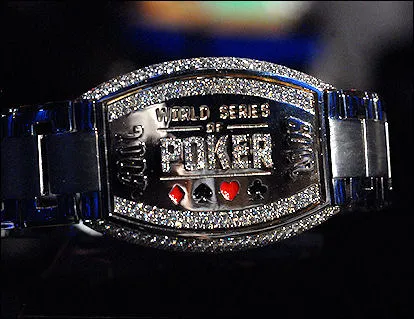
The 2026 Main Event wrapped up on August 5 at Horseshoe and Paris in Las Vegas. Lucas Jumalon, from Spokane, Washington, beat Finland’s Lauri Saaskilahti heads-up for the bracelet and the $10 million top prize. Saaskilahti banked $6 million for second.
Jumalon is 22 years, four months and 28 days old. Per CardPlayer, that makes him the second-youngest Main Event champion ever — a few months older than Joe Cada in 2009. Cada’s record stood for 17 years and just survived by a margin you could measure in weeks.
If you followed this from July, you’ll remember he was already the chip leader when the final table was set. We noted him as the man to beat then. Nobody expected him to hold it the entire way.
The field finished at 9,208 entries for an $85,634,400 prize pool — we broke down what that number actually says in our piece on the 9,208 field, so I won’t rehash it here.
What this means for the rest of us
I want to sit on the thing most of the coverage skipped: how hard a wire-to-wire final table actually is.
Every headline led with “22” and “$10 million,” which I understand — those write themselves. But unpack “led from the first hand to the last.” A nine-handed final table runs for dozens of hours and the chip counts get reshuffled repeatedly. Misjudge one big pot and the chip lead is gone. And during the stretch where ICM pressure peaks, one mistake usually doesn’t cost you a pay jump — it costs you the tournament.
So he didn’t win a tournament so much as go dozens of hours without a fatal error. That’s harder than being young, and far more repeatable than running hot.
What’s in it for you? One genuinely useful thing: playing a big stack correctly is the most counterintuitive part of tournament poker. Amateurs with the chip lead go wrong in two directions — either they tighten up to “protect the finish” and hand the advantage straight back, or they get loose because they feel like they can afford to experiment. Jumalon did neither. He used the stack to squeeze the medium stacks, the players who genuinely could not afford to call, and stayed away from confrontations with the other big stack.
That logic scales all the way down to your local Sunday tournament. What decides your finish at a final table is often not who you beat — it’s who you avoided.
Second thought, on the age. The reflex take is “kids these days are fearless.” I think the duller explanation is better. Someone born in 2004 has had solvers, range trainers and GTO charts available since before they could legally play. They didn’t need a decade of live cash to build intuition — they had better tools at 16 than Cada had when he won.
Which means the story isn’t really about talent. The learning curve got flattened by software. And that cuts in your favour: preflop range charts, ICM math, push/fold work — all free now. The gap isn’t access. It’s whether you’ll do the reps to turn a chart into a reflex.
Where I come down on it
My call: the “youngest champion” record falls within five years, and it’ll be another player who came up online.
Cada’s mark took 17 years to even be approached, and this time it missed by months. That isn’t a coincidence. The legal age is 21, so the theoretical window between “eligible” and “champion” is barely a year. That window used to be far too narrow for a newcomer — you needed time to accumulate experience. Training tools have compressed that time, and a 21-year-old champion has moved from “basically impossible” to “someone eventually gets there.”
I might be wrong. The Main Event has an enormous luck component and records like this need one person to run it perfectly. Call it a coin flip; I’m just putting the marker down.
The other thing I’ll complain about: the sport consistently under-rates wire-to-wire runs. It’s a rarer achievement than any age-based label, but it doesn’t fit in a headline, so it gets buried in paragraph three. If I had to pick one fact to argue this champion is the real thing, it’s that one — not the birthday.
Practical close: if you want to play a Main Event, treat it as an outcome, not a goal. In a 9,000-plus field a cold $10K buy-in is a negative-EV purchase for almost everyone reading this. Go through satellites, get in for a tenth of the cost, and when it doesn’t work out you’ve lost satellite money instead of rent money. That’s the version of this trip I’ve never seen anyone regret.
FAQ
Who won the 2026 WSOP Main Event?
Lucas Jumalon, a 22-year-old from Spokane, Washington. He beat Finland’s Lauri Saaskilahti heads-up on August 5, 2026 for $10,000,000 and the bracelet. Saaskilahti took $6,000,000 for second.
Is Jumalon the youngest Main Event champion ever?
No, second-youngest. He was 22 years, four months and 28 days. Joe Cada still holds the record from 2009, when he won shortly before turning 22.
What does “wire-to-wire” mean at a final table?
Holding the chip lead from the first hand of the final table to the last hand of the tournament without ever being overtaken. Nine-handed final tables run for dozens of hours with the counts reshuffling repeatedly, which is why it’s rare.
How should you play a big stack at a final table?
Use it to pressure the medium stacks who cannot afford to call, and avoid big confrontations with the other large stack. The two common amateur errors are tightening up to protect a finish and getting loose because the stack feels like a licence to experiment — both give the lead back quickly.
How can a regular player get into the Main Event?
Direct buy-in is $10,000. For most people I’d suggest satellites — roughly a tenth of the cost for a shot at a seat, and if it doesn’t come in your loss is capped at satellite money.
Sources: WSOP.com, CardPlayer, PokerNews