2026 WSOP Main Event Final Table Set: Young Gun Lucas Jumalon Leads $10 Million Chase
The 2026 WSOP Main Event final table is set. Nine players are left from a field of 9,208 entries, and a 22-year-old, Lucas Jumalon, is running away with it — he bagged 194,000,000 chips, roughly 129 big blinds, more than double second place. Everyone left is locked up for at least $1,000,000, the winner takes $10,000,000 and the gold bracelet, and play resumes August 3 with ESPN airing edited coverage.
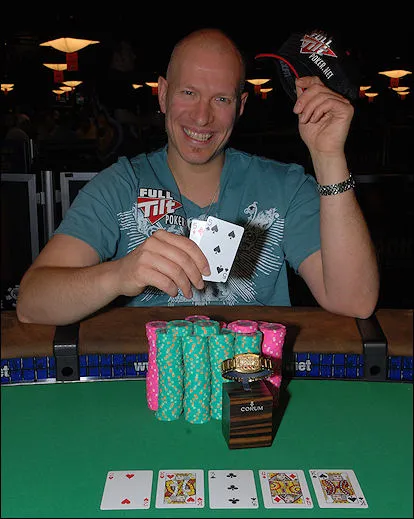
Okay, we have a final table. After eight brutal days, the 2026 WSOP Main Event is down to its final nine, and I’ve been refreshing chip counts like it’s my job. Out of 9,208 entries — the fourth-largest Main Event field ever — nine players are left standing, and every single one of them has already locked up a seven-figure score. Think about that for a second: the worst anyone at this table can do is walk away a millionaire. Ninth place pays $1,000,000. The winner gets $10,000,000 and the most famous piece of jewelry in the game.
And then there’s the chip leader. I’ll be honest, when I saw the final bag counts I did a double take. This isn’t a close race at the top — it’s a runaway.
Who Made the 2026 WSOP Main Event Final Table?
Here’s the full final nine and the stacks they’ll sit down with when play resumes. PokerNews and ESPN both reported the confirmed counts after Day 8 wrapped (PokerNews, ESPN).
| Seat | Player | Country | Chips | Big Blinds |
|---|---|---|---|---|
| 1 | Lucas Jumalon | United States | 194,000,000 | 129 |
| 2 | Rami Hammoud | Canada | 79,000,000 | 53 |
| 3 | Jamie Shaevel | United States | 56,000,000 | 37 |
| 4 | Greg Mueller | Canada | 48,500,000 | 32 |
| 5 | Michael Gagliano | United States | 46,500,000 | 31 |
| 6 | Mario Boos | France | 44,000,000 | 29 |
| 7 | Lauri Saaskilahti | Finland | 37,500,000 | 25 |
| 8 | Han Feng | United States | 25,000,000 | 17 |
| 9 | Evagoras Evagorou | Cyprus | 22,500,000 | 15 |
It’s a genuinely international table — the United States has four seats, Canada has two, and France, Finland and Cyprus each put one player through. That’s the beauty of the Main Event: a $10,000 buy-in and a global field means the last nine can come from anywhere.
Just How Big Is Lucas Jumalon’s Chip Lead?
Let me put it in perspective. Jumalon bagged 194,000,000. Second-place Rami Hammoud has 79,000,000. That’s not a lead, that’s a canyon — Jumalon has nearly two and a half times the chips of the next-closest player, and more than the bottom four stacks combined. In big-blind terms he’s sitting on about 129 big blinds while the short stacks at the table are down around 15-17. At a nine-handed final table, that is an absurd amount of room to operate.
What makes it wilder is that he’s 22 years old. PokerNews described his Day 8 as a dominant, stack-building run, and the numbers back that up — you don’t bag a stack like this by getting lucky once, you do it by applying pressure all day. Now, does a big chip lead guarantee anything? Absolutely not. We have watched monster chip leaders lose the Main Event plenty of times — poker is cruel like that, and one cooler can swing 60 or 70 big blinds in a single hand. But if I’m handicapping this table today, Jumalon is the clear favorite, and it’s not particularly close. He can afford to sit back, let the short stacks knock each other out on the pay jumps, and pick his spots.
Which Veterans Can Still Catch Him?
This is where it gets fun for me, because it’s not just a table of unknowns chasing a kid. There are two seriously accomplished pros sitting in the middle of the pack. Greg Mueller, the Canadian with 48,500,000, is a three-time WSOP bracelet winner who knows exactly how to navigate a stage this big (PokerNews). And right behind him, Michael Gagliano with 46,500,000 owns four career WSOP bracelets — one 2016 live win plus three online titles. These are not guys who are going to freeze up under the lights.
The problem for both of them is math. With around 30 big blinds each and a runaway leader to their left or right, they’re stuck in that awkward zone where they have enough to play but not enough to bully. They can’t just open every pot the way Jumalon can. If I’m Mueller or Gagliano, my whole game plan is patience plus one well-timed double-up — get to 60-70 big blinds and suddenly you’re a real threat to the lead. Experience matters enormously here, and I’d trust either of them to find the right spot. But they need the cards to cooperate, and that’s the one thing no amount of experience can fix.
The mid-pack — Hammoud, Shaevel, Boos — are the ones I have my eye on as dark horses. Any of them catches a run of hands early and this becomes a real tournament again.
Why ICM Rules This Final Table
Here’s the part casual viewers miss, and it’s the single most important thing to understand about how these nine will actually play on August 3: chips are not money. The pay jumps at a Main Event final table are enormous — every player is guaranteed $1,000,000, but the ladder climbs steeply toward that $10,000,000 top prize. That means the real dollar value of survival is worth far more to a short stack than the raw chips suggest. This is the whole idea behind ICM, the Independent Chip Model, and it warps every decision at the table.
In plain English: when Han Feng or Evagoras Evagorou is sitting on 15-17 big blinds, folding into a pay jump can literally be worth hundreds of thousands of dollars. So they’re going to play tighter than the chip counts alone would suggest, waiting for a premium or a clean shove spot. Meanwhile Jumalon, who has so many chips that busting doesn’t threaten his equity much, gets to lean on everyone — he can open light and reshove because he’s not the one risking a life-changing pay jump. If you want to see exactly how much a stack is worth in real money at a spot like this, our ICM calculator is built for precisely this — plug in the stacks and payouts and watch how survival equity dwarfs chip equity near the money. I’d also point anyone who wants the fundamentals to our guide on building a stack in the early stages of a tournament, because the discipline that gets you to a final table is the same discipline that wins one.
When Does the Final Table Play, and What Should You Watch For?
Play resumes August 3, 2026. If you’re wondering why there’s a three-week gap, it’s the TV deal — the final table has been delayed until August so ESPN can build up its edited broadcast and market the finale. Personally I have mixed feelings about the delay (the momentum stall is real), but it does turn the final table into an event you can actually plan your night around, and the coverage is better for it.
What am I watching for? Three things. First, whether Jumalon keeps his foot on the gas or tightens up to protect the lead — young leaders sometimes get cautious and let the table back in. Second, the first big pay-jump confrontation, because that’s when ICM pressure peaks and someone’s tournament ends on a gut-wrenching fold-or-shove decision. Third, whether one of the veterans, Mueller or Gagliano, can spin up a stack early and make it a two-horse race. For the full backstory on how this monster field got here, I broke down the record-adjacent 9,208-entry field and the tension of money-bubble day in earlier pieces.
Frequently Asked Questions
Who is the chip leader at the 2026 WSOP Main Event final table?
Lucas Jumalon, a 22-year-old from the United States, leads with 194,000,000 chips (about 129 big blinds), more than double the second-place stack.
How much does the 2026 WSOP Main Event winner get?
The champion wins $10,000,000 and the Main Event gold bracelet. Every finalist is guaranteed at least $1,000,000.
When is the 2026 WSOP Main Event final table?
Play resumes on August 3, 2026, and the finale plays out over the following days on ESPN, which is airing edited coverage.
How big was the 2026 WSOP Main Event field?
It drew 9,208 entries, the fourth-largest in the tournament’s 57-year history, for an $85,625,100 prize pool. The all-time record remains 10,112 entries, set in 2024.
So there it is — nine players, at least a million each, and a 22-year-old with a canyon-sized lead standing between everyone else and ten million dollars. My gut says Jumalon closes it out, but the beauty of the Main Event is that the chips reset to zero the moment the cards go in the air on August 3. Mark your calendar. This one’s going to be worth the wait.