How Much Should I Buy In For? Mastering Your Poker Cash Game Buy-In Strategy
For most standard no-limit hold’em cash games, buying in for 100 big blinds (BB) is generally the sweet spot. It gives you enough room to play post-flop, make strategic bluffs, and leverage implied odds without over-committing your bankroll or feeling overwhelmed by a massive stack.
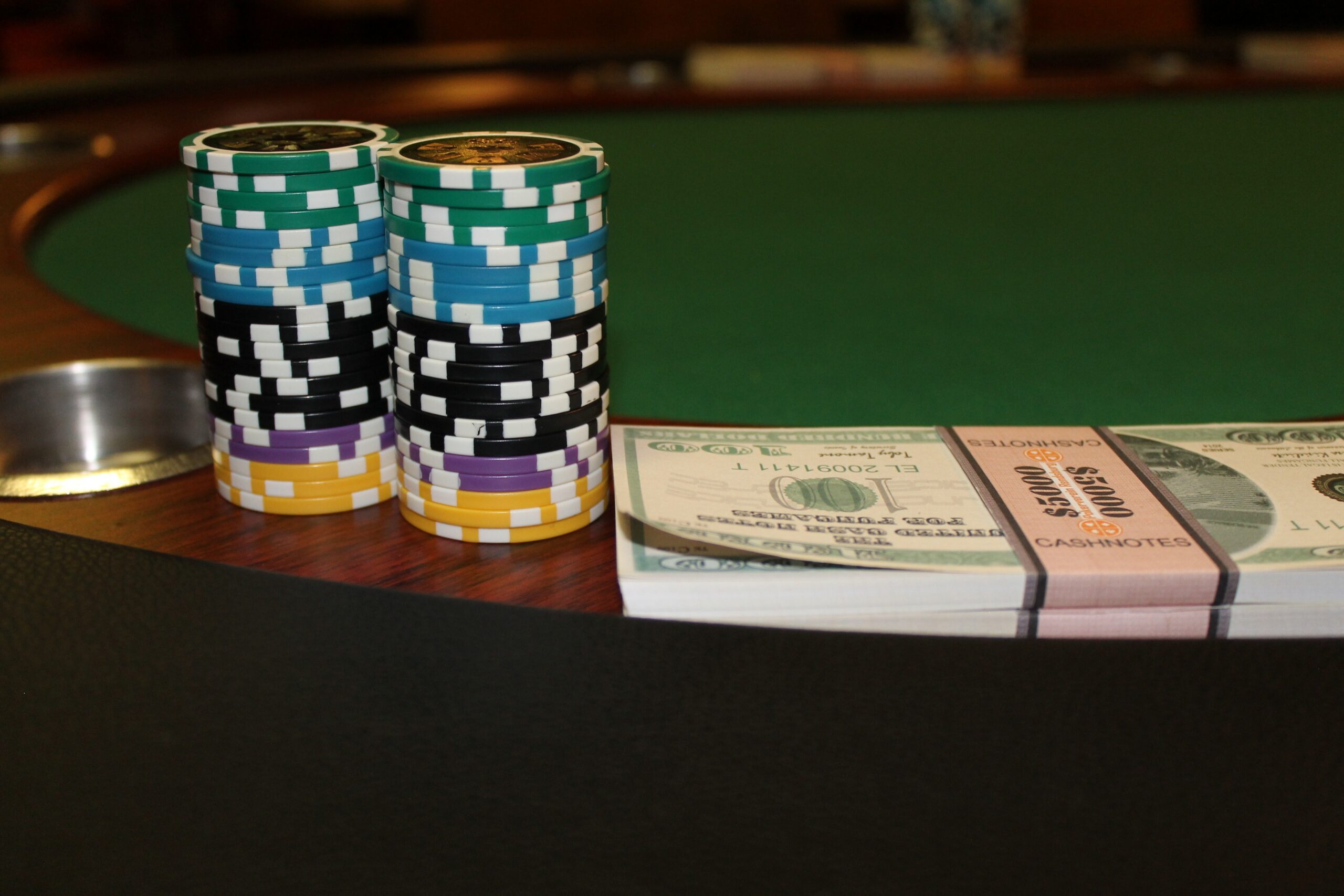
Okay, so let’s talk about something that honestly, I used to completely gloss over when I first started playing poker: how much money you actually buy in for at a cash game. It sounds simple, right? Just sit down, throw some chips in, and play. But man, I’ve learned the hard way that your buy-in amount is probably one of the most underrated strategic decisions you make before you even see your first two cards.
I mean, I’ve been playing for about four years now, both live and online, and I’ve had my share of ups and downs. That time I cashed in the WSOP Event #31? Yeah, that felt amazing. But for every one of those, there are ten stories of me making some boneheaded mistake, and a lot of them started with a bad buy-in decision. So, trust me, this isn’t just some theoretical fluff. This is real-world, ‘I lost money because I didn’t think about this’ kind of advice.
It’s not just about how much money you’re willing to risk. It’s about how that stack size changes *everything* about how you play, how others play against you, and ultimately, your chances of walking away a winner. Seriously, don’t just blindly buy in for whatever. Think about it. It matters.
Ready to level up your game? Free registration to start practicing, no credit card needed!
Once you know your buy-in, the poker chip calculator turns it into an exact per-player chip breakdown for any denomination set.
Why does buy-in amount even matter?
Look, it’s not just about how much money you have in front of you; it’s about what that money *allows* you to do, or prevents you from doing. Honestly, when I first started, I thought it was just about bankroll management. Like, ‘Oh, I only want to risk $100 tonight, so I’ll buy in for $100.’ Simple. But that’s only half the story, maybe even less than half.
Your stack size affects your perceived image at the table, for starters. A super short stack might look like someone scared, or someone trying to gamble. A super deep stack might look like a pro, or a huge fish. It also dictates your options. With a tiny stack, you’re basically in push-or-fold mode a lot of the time. You can’t really make fancy bluffs, you can’t set mine effectively for implied odds, and you become a target for bigger stacks who know you can’t stand the heat. They’ll just keep betting you off your equity. It’s frustrating as hell.
On the flip side, a really deep stack, like 300+ big blinds, opens up a whole new world of plays. You can call more loosely pre-flop with speculative hands because the implied odds are huge. You can make bigger bluffs, represent stronger hands, and put more pressure on your opponents. But it also means you can lose a lot more money if you make a mistake. It’s a double-edged sword, absolutely.
Your stack size directly influences your Stack-to-Pot Ratio (SPR), which is a crucial concept in post-flop play. A low SPR often means committing to the pot with marginal hands, while a high SPR allows for more complex decisions and bluffing opportunities. Understanding SPR is key to making better decisions based on your buy-in.
I remember reading an article once, I think it was on PokerNews, that talked about how pros often adjust their buy-ins based on the table dynamics. They’re not just throwing money around. They’re thinking, ‘Okay, this table is full of calling stations, I need a deep stack to get max value from my big hands,’ or ‘This table is super aggressive, maybe I’ll buy in a bit shorter to limit my downside and play a more straightforward game.’ It’s like choosing the right tool for the job. You wouldn’t use a hammer to screw in a nail, right?
What’s the standard buy-in for most cash games?
Okay, so let’s get down to brass tacks. What’s the ‘normal’ amount? Most casinos and online sites set their standard buy-in range between 40 big blinds (BB) and 100 BB, sometimes even 200 BB for the maximum. But the generally accepted ‘standard’ for a healthy, flexible stack is 100 big blinds.
Why 100 BB? Because it gives you enough chips to make strategic plays without feeling like you’re playing for your life on every street. You can absorb a few small losses, make a few bluffs, and still have enough firepower to win a big pot when you hit. It’s the sweet spot where you have enough leverage but aren’t risking your entire life savings on one hand.
Here’s a quick table to show you typical ranges and what I usually recommend:
| Game Type (Blinds) | Typical Minimum Buy-in | Typical Maximum Buy-in | Emma’s Recommendation |
|---|---|---|---|
| Online NL25 ($0.10/$0.25) | $10 (40 BB) | $25 (100 BB) | $25 (100 BB) |
| Online NL100 ($0.50/$1) | $40 (40 BB) | $100 (100 BB) | $100 (100 BB) |
| Live $1/$2 | $60-$80 (30-40 BB) | $200-$300 (100-150 BB) | $200-$300 (100-150 BB) |
| Live $2/$5 | $200-$300 (40-60 BB) | $500-$1000 (100-200 BB) | $500-$1000 (100-200 BB) |
You’ll notice live games often have higher maximums compared to their online counterparts, relative to the minimums. That’s because live games tend to play deeper and people are often willing to gamble more. Also, live players are often less skilled on average, so having a deeper stack allows you to exploit them more effectively when you hit a big hand.
Should I buy in for the minimum or maximum?
This is where it gets tricky, and honestly, neither minimum nor maximum is inherently ‘best.’ It totally depends on your skill level, your bankroll, and the table dynamics. I’ve made arguments for both, and I’ve certainly regretted both choices at different times!
Buying in for the Minimum (40-60 BB)
Pros:
- Less Risk: Obviously, you’re putting less money on the line. Great for beginners or if you’re trying out a new game/casino.
- Simpler Decisions: With a shorter stack, your decisions become more straightforward. You’re often in a push-or-fold situation, which can reduce complex post-flop play.
- Bankroll Management: If your bankroll is tight, playing with a minimum buy-in can help you manage your funds more responsibly.
Cons:
- Limited Play: This is the big one. You can’t make many bluffs, you can’t really set mine for implied odds, and you’re often getting bad odds to call with drawing hands.
- Targeted: Bigger stacks will see you as easy prey. They’ll constantly put pressure on you, knowing you can’t call off their bets without risking your whole stack.
- Less Value: When you *do* hit a big hand, you can’t extract as much value because your stack isn’t deep enough to get multiple streets of value.
Buying in for the Maximum (100-200 BB+)
Pros:
- Maximum Flexibility: You have all the chips to make all the plays. Bluffs, big value bets, implied odds plays – everything is on the table.
- Exploitation: This is where you can really exploit weaker players. You can isolate them, put them in tough spots, and stack them when they make mistakes.
- Implied Odds: Drawing hands like suited connectors or small pairs become much more profitable because you can win a huge pot when you hit.
Cons:
- More Risk: Plain and simple, you can lose more money. If you’re not comfortable playing deep-stacked, you can quickly find yourself in trouble.
- Complex Decisions: Deep-stacked play involves a lot more nuance and skill. It’s not for the faint of heart or the inexperienced.
- Higher Variance: Because you’re playing bigger pots and making more complex plays, your results can swing wildly.
I remember this one time, at the Bellagio $1/$2 game in Vegas. I was feeling a bit off, maybe a little tired after a long day of walking around. Didn’t want to risk too much, so I bought in for the minimum $60. I folded for like 30 minutes, just trying to get a feel for the table. Then, I got dealt AA in the cutoff. A guy in early position, who had about $150, opened for $8. Another player called, and I made it $28. The original opener folded, but the caller, who I knew was a bit of a calling station, called my 3-bet. Flop came K-Q-7 rainbow. I had about $32 left in my stack. He checked, and I just felt like I *had* to shove. My SPR was so low, and I had top pair, so it felt like the only move. He called with KJ. Turn was a blank, river was a J. He hit two pair on the river and I lost. Ugh. If I had bought in for $200, I could have played it so differently, maybe checked the flop to induce a bluff, or bet smaller to keep him in with his weaker hand. But with $32 left, I felt like I had no options and had to just go for it. It limited all my options and I ended up losing to a worse hand that I probably could have avoided or at least extracted more value from if I wasn’t so short-stacked and desperate. Still annoys me thinking about it, honestly.
Don’t let a bad buy-in decision dictate your game like that. Think smart, play smart.
Click here to check out the registration process and start practicing!
How does stack size affect my strategy?
Your stack size dictates your viable moves, plain and simple. It’s like trying to play chess with only pawns versus playing with a full set of pieces. You just have different options.
Short-Stack Strategy (40-60 BB)
- Pre-flop Focus: You’re looking for strong, premium hands to get all-in pre-flop or on the flop. Think big pairs, AK, AQ.
- Value Betting Thin: You need to bet for value when you have it, because you won’t have many opportunities for fancy bluffs.
- Limited Bluffs: Bluffs are super hard to pull off with a short stack because your bets represent such a large portion of your stack. People will call you down lighter.
- Push/Fold: You’ll often find yourself in situations where it’s either push all-in or fold. This simplifies decisions but makes you predictable.
Deep-Stack Strategy (100 BB+)
- Implied Odds: This is where deep stacks shine. You can play speculative hands like suited connectors (7h8h) or small pairs (22, 33) because if you hit a big hand (flush, straight, set), you stand to win a huge pot from a bigger stack.
- More Bluffs: You have the chips to make multi-street bluffs and represent stronger hands. You can apply pressure.
- Position Play: Position becomes even more crucial. You can control the size of the pot and make more informed decisions after seeing how others act.
- Stack-to-Pot Ratio (SPR): You’ll be thinking a lot about SPR. A high SPR means you have more room for maneuver and can make more complex plays.
I remember Daniel Negreanu once talking about how he adjusts his play based on effective stack sizes. He’s a huge proponent of playing deep because it allows him to ‘outplay’ opponents over multiple streets. For example, if he’s got a big hand and an opponent has a short stack, he knows he needs to get all the chips in quickly. But if he’s against another deep stack, he can slow play a monster, build a bigger pot, and really milk them for value. It’s all about understanding what your stack allows you to do against your opponent’s stack.
If you’re new to deep-stacked play, start by observing how pros handle it. Watch some streams, read some books like Harrington on Hold’em (even though it’s tournament focused, the deep stack concepts apply), and try to understand the logic behind their big bets and calls. It’s a whole different game.
What are some common buy-in mistakes to avoid?
Oh man, I’ve seen ’em all, and I’ve made most of them myself. People make the same mistakes over and over, and it’s frustrating to watch, especially when you know it’s easily avoidable. Here are a few that drive me nuts:
Buying in Too Short Out of Fear
You sit down with the minimum because you’re scared to lose money. I get it, really. But what happens is you cripple yourself strategically. You can’t bluff, you can’t play drawing hands, and you become a target. You’re basically playing for survival, not for profit. It’s a self-fulfilling prophecy of being unable to play good poker. If you’re that scared, maybe the stakes are too high for your bankroll right now.
Buying in Too Deep Without the Skill
This is the opposite problem. You see everyone else with huge stacks, so you buy in for the max 200-300 BB, even though you usually play with 100 BB. Suddenly, you’re in uncharted territory. The decisions are harder, the pots are bigger, and you find yourself making huge mistakes because you’re not used to the dynamics. It’s like bringing a knife to a gunfight, but then realizing you don’t even know how to use the gun.
Not Re-buying Effectively
You lose a chunk of your stack, and instead of topping up to a comfortable level, you let it dwindle. You go from 100 BB to 50 BB, then to 30 BB, and before you know it, you’re back to playing a scared short-stack game, even though you started deep. Always rebuy to keep your stack at a strategic size, ideally back to what you started with, or even more if the table is really good.
Chasing Losses by Buying in Even Deeper
This is bankroll suicide. You’re down $200, so you think, ‘Okay, I’ll buy in for another $500 to get it all back!’ No, no, no. When you’re tilted and chasing losses, you’re making emotional decisions, not logical ones. You’ll probably just lose that $500 too. If you’re losing, take a break. Don’t throw good money after bad. I once saw a guy at Commerce Casino just keep topping up to max after losing like three full stacks in an hour. It was painful to watch, and he just kept getting more and more frustrated. Don’t be that guy.
Are there any advanced buy-in strategies?
Once you’re comfortable with the basics, and you’ve got a handle on playing with a 100 BB stack, you can start thinking about more advanced stuff. This is where you really start to leverage your buy-in as a weapon.
Dynamic Buy-in Adjustment
This is a big one. Instead of just defaulting to 100 BB, you adjust your buy-in based on the specific table you’re sitting at. If it’s a super loose, passive table with lots of calling stations and big stacks, I might buy in for 150 BB or even 200 BB. Why? Because I know I’ll get paid off big when I hit, and I want to cover those big stacks. If it’s a really tight, aggressive table with lots of good players, I might stick to 100 BB or even go a little shorter (like 70-80 BB) to play a simpler, more disciplined game and minimize my risk.
Re-buying to Cover Opponents
This is crucial if you’ve identified a specific ‘fish’ or weaker player at the table who has a big stack. Let’s say you have $100, and the fish has $300. You want to be able to stack them completely. If you win a pot and now have $200, but the fish still has $300, you should top up to $300 (or whatever the maximum is) to ensure you have them covered. This way, if you get into a huge hand with them, you can take their entire stack, not just a portion of it. Daniel Negreanu often talks about this on his MasterClass, emphasizing how important it is to have the effective stack to maximize your winnings against weaker players. It’s a key part of exploitation.
Always be aware of the ‘effective stack’ at the table. This is the smallest stack involved in a hand, and it dictates how much you can actually win or lose in that specific hand. Adjusting your buy-in to always have the effective stack against a weaker opponent is a powerful move.
The ‘Hit and Run’ Strategy (for short stacks)
This isn’t my personal favorite, but some people use it. Buy in for the minimum (e.g., 40 BB), try to double up quickly with a premium hand, and then leave. The idea is to minimize your time at the table and reduce variance. It’s a very high-variance strategy itself, and you don’t get to play much poker, but it’s a thing. I wouldn’t recommend it for consistent play, but if you’re just looking for a quick gamble, it’s an option.
Remember, these advanced strategies aren’t for beginners. You need a solid understanding of poker fundamentals, bankroll management, and table dynamics before you start messing with your standard buy-in. Otherwise, you’re just asking for trouble.
Poker involves financial risk — play responsibly. Never play with money you can’t afford to lose, and always be mindful of your bankroll.
常见问题
Can I change my buy-in amount mid-game?
Yes, you can usually top up your stack (add more chips) at any time, as long as it doesn’t exceed the table’s maximum buy-in. Some casinos might have rules about how often you can do it, but generally, it’s fine.
What if I only have enough for the minimum?
If your bankroll only allows for the minimum buy-in, it’s okay to start there. Just be aware that your play will be more restricted, and you’ll need to play a tighter, more straightforward game. Consider if the stakes are right for your current bankroll.
Does buy-in strategy apply to tournaments?
Tournament buy-ins are fixed, so the strategy isn’t about *how much* to buy in for, but rather how to adjust your play as your stack changes relative to the blinds and average stack. The principles of stack depth influencing strategy still apply, just in a different context.
Is it okay to buy in short if I’m a beginner?
For absolute beginners, buying in a bit shorter (but not too short, like 60-80 BB) can be a good way to learn without risking too much. It simplifies decisions, but don’t stay there too long. Aim to play 100 BB as you get more comfortable.
Should I always buy in for 100 big blinds?
100 BB is a great default for most players and situations. However, as you gain experience, you might adjust this dynamically based on the table’s specific dynamics and your opponents’ stack sizes, as discussed in the advanced strategies section.
Free Registration · No Credit Card Needed
Poker involves financial risk — play responsibly.