Big Blind Defense Strategy: When to Call, When to Fold, and How to Stop Bleeding Chips
Why Does Everyone Keep Telling Me to “Defend My Big Blind”?
If you’ve played Texas Holdem for any amount of time, you’ve heard the advice: “You’re getting a good price in the big blind, so you should be calling wide.” And that’s true — sort of. The problem is that people hear “defend wide” and turn it into “call with literally everything,” which is how you end up hemorrhaging chips from the worst position at the table.
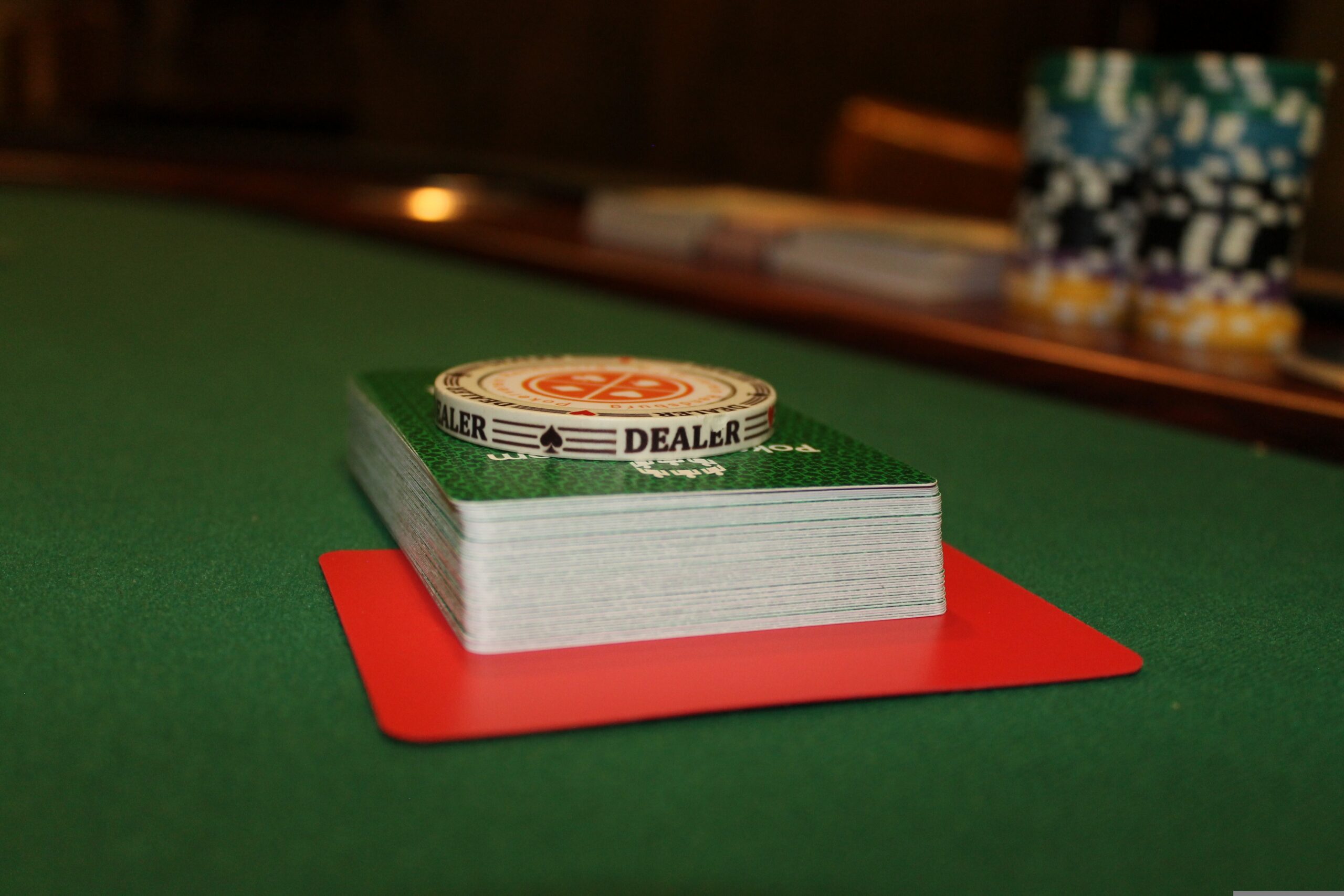
I used to be one of those players. In my first year of playing $1/$2 live cash games, I treated every big blind as if folding was a personal insult. Someone raises from the cutoff? I’d look down at J-4 offsuit and think, “Well, I’m getting 3.5-to-1, might as well see a flop.” Spoiler alert: that flop rarely brought anything but regret. It took me about 200 hours — and a very honest session review — to realize that my big blind was the single biggest leak in my game. I was defending roughly 65% of hands against all positions, and my post-flop win rate from the big blind was catastrophically negative. The moment I started actually thinking about which hands to defend and against which positions, my overall win rate improved by almost 2 BB/100. That’s not a small number.
This guide is about finding that balance — defending enough that you’re not a pushover, but not so much that you’re lighting money on fire out of position every orbit.
What Makes the Big Blind So Different From Every Other Position?
The big blind has two unique characteristics that make it the most complex position at the table:
- You already have money in the pot. This means you need less equity to call profitably compared to other positions. If someone raises to 3BB and there’s 1.5BB from the small blind already in, you’re getting 4.5-to-2 (or 2.25-to-1) to call. That’s a significantly better price than calling from the button or cutoff.
- You’re out of position for the rest of the hand. Every street after the flop, you act first. You don’t get to see what your opponent does before making your decision. This positional disadvantage is massive and is the main reason you can’t just defend everything despite the good price.
These two factors pull in opposite directions. The price says “call more,” the position says “call less.” The skill of big blind defense is figuring out exactly where the line falls for each situation.
The Pot Odds Math You Need to Know
Let’s do the basic calculation. In a standard game with a button ante (or traditional SB/BB structure):
| Raise Size | Pot Before Your Call | Cost to Call | Pot Odds | Required Equity |
|---|---|---|---|---|
| 2BB (min-raise) | 3.5BB | 1BB | 3.5-to-1 | ~22% |
| 2.5BB | 4BB | 1.5BB | 2.67-to-1 | ~27% |
| 3BB | 4.5BB | 2BB | 2.25-to-1 | ~31% |
| 4BB | 5.5BB | 3BB | 1.83-to-1 | ~35% |
Against a min-raise, you only need ~22% equity to call. That includes a lot of hands. Against a 3BB raise, you still only need 31%. The math alone would have you defending incredibly wide — but remember, raw equity isn’t the whole story when you’re going to be out of position for three streets.
How Should I Adjust My Defense Range Based on Who’s Raising?
This is the single most important concept in big blind defense, and it’s where most intermediate players still get it wrong. The position of the raiser fundamentally changes how wide you should defend.
Against Under-the-Gun (UTG) Raises
The tightest defense. UTG opens represent the strongest ranges at the table — typically the top 12-15% of hands. Against this range, you should be defending roughly 25-30% of hands. Your defending range here should look something like:
- Call: 22-99, A9s-AJs, KTs+, QTs+, JTs, T9s, 98s, 87s, 76s, suited aces (A2s-A5s for playability)
- 3-Bet: QQ+, AKs, AKo, and occasionally AQs or JJ as a mixed strategy
- Fold: Everything else. Yes, that means folding K8o, Q9o, J7s, and a lot of hands that “look okay”
Against Cutoff (CO) Raises
The CO opens wider than UTG — typically 20-25% of hands. You can expand your defense to about 35-40%:
- Call: Everything from the UTG defense, plus hands like K9s, Q9s, J9s, T8s, 97s, 86s, 75s, 65s, and stronger offsuit broadways (KJo, QJo)
- 3-Bet: JJ+, AKs, AKo, AQs, and some bluff 3-bets with hands like A5s, A4s, K5s
Against Button (BTN) Raises
Here’s where the real battle happens. The button opens the widest — often 40-50% of hands. This is where you need to defend the most aggressively, roughly 45-55% of hands:
- Call: Very wide — most suited hands, connected hands, face card combinations. Hands like K4s, Q6s, J7s, T7s, 96s, 85s, 74s all become calls
- 3-Bet: TT+, AQs+, AKo, and a wide bluffing range — A2s-A5s, K9s-K5s, suited connectors like 67s-89s
- Fold: The worst offsuit hands: 72o-92o, J2o-J5o, etc.
The key insight here ties directly into range thinking: you’re not just playing your two cards, you’re playing your range against their range. The button’s wide opening range means your marginal hands have more equity against their average holding. If you want to see exactly how different starting hands stack up, check out the starting hand charts by position.
Against Small Blind Raises
This one’s tricky. When the small blind completes or raises, they’re also going to be out of position (to the rest of the table, though in position relative to… wait, no — SB vs BB, the BB actually has position post-flop). This is the one spot where you have position in the big blind, and you should exploit it. Defend very wide — 55-65% of hands — and be aggressive with 3-bets.
What’s the Real Cost of Over-Defending vs Under-Defending?
Both mistakes are costly, but they’re costly in different ways:
The Over-Defender
This player calls too many hands, especially offsuit junk against early position raises. The symptoms:
- Winning a lot of small pots on dry boards but losing big pots when dominated
- Frequently getting to the river with second or third pair and facing painful decisions
- High VPIP from the big blind (above 55% against all positions combined)
- Negative win rate from the big blind that’s worse than -30 BB/100
The over-defender bleeds chips slowly. It doesn’t feel like a disaster because each individual call doesn’t seem that bad, but over thousands of hands, calling K-7 offsuit against a UTG raise adds up to a lot of lost money.
The Under-Defender
This player folds too much, especially against late position raises. The symptoms:
- Getting stolen on constantly by aggressive button and cutoff players
- Opponents start raising wider and wider against you because they know you fold
- Big blind VPIP below 30% against all positions
- Losing close to 100 BB/100 from the big blind (basically surrendering your blind every orbit)
The under-defender is a more obvious leak because good opponents will notice and start attacking relentlessly. If the button realizes you fold 80% of the time, they’ll raise 100% of their buttons and print money against you.
How Do I Play Post-Flop After Defending My Big Blind?
Defending the big blind is only half the battle. The real skill is what happens on the flop, turn, and river when you’re out of position against the pre-flop raiser.
The Check-Call vs Check-Raise Decision
As the big blind defender, your default action on the flop is to check. The question is: what do you do when the pre-flop raiser bets (which they will, a lot)?
Check-call when:
- You have a medium-strength hand (top pair weak kicker, second pair good kicker, decent draws)
- The board is relatively dry and your hand is unlikely to be dominated
- You want to keep the pot small and see a turn
Check-raise when:
- You have a very strong hand (sets, two pair, top pair top kicker on a board that could get ugly)
- You have a strong draw (open-ended straight draw + flush draw, for example)
- You want to build the pot or deny equity against hands that would benefit from seeing a free turn
- You need to balance — if you only check-raise with monsters, opponents will just fold to your raises
The Donk Bet: When Leading Into the Raiser Makes Sense
Traditional wisdom says “never donk bet” (lead into the pre-flop raiser). Modern poker has moved past this. There are specific board textures where the big blind’s range actually has an advantage, and leading becomes the correct play:
- Low, connected boards (like 5-6-7, 3-4-6): These boards hit the big blind’s calling range much harder than the pre-flop raiser’s range
- Paired boards (like 8-8-3): The big blind defends with more random hands that include 8x combinations
- Monotone boards (three of one suit): When you flop a flush or flush draw, leading can build the pot immediately
But donk betting should be a small part of your strategy — maybe 10-15% of flops at most. If you’re donk betting more than that, you’re probably doing it wrong.
How Do I Handle Multi-Way Pots From the Big Blind?
When there’s a raise and one or more callers before the action gets to you, the dynamics shift significantly:
- Your pot odds get better — more money in the pot means you need less equity to call
- Your post-flop position gets worse — you’re out of position against multiple players, not just one
- You need stronger hands to go to showdown — in a 4-way pot, top pair is much less likely to be the best hand than in a heads-up pot
The net effect: call slightly wider pre-flop (because of odds), but play much more cautiously post-flop. Speculative hands like suited connectors and small pairs go up in value (they can make nutted hands), while marginal hands like K-8 offsuit go down in value (top pair bad kicker in a multi-way pot is a recipe for disaster).
Can You Walk Me Through a Real Hand From the Big Blind?
Hand Example 1: Defending Against a Button Steal
Game: $1/$2 No-Limit Holdem, 6-handed, effective stacks $300 (150BB)
Everyone folds to the Button, who raises to $6. Small blind folds. I look down at 9♠ 7♠ in the big blind.
Pre-flop decision: This is a clear defend. I’m getting 3.5-to-1 against a wide button opening range, and 97s has good playability — it can make straights, flushes, and two pair. I call $4 more.
Flop ($13): 8♥ 6♣ 2♦
I check. The button bets $8 (about 60% pot).
I have an open-ended straight draw (any 5 or T gives me a straight) plus a backdoor flush draw. I have 8 clean outs to the straight, which gives me roughly 32% equity against most hands. I’m getting 2.6-to-1, and I need about 28% equity to call — plus I have implied odds if I hit. But I also have a hand strong enough to check-raise as a semi-bluff.
My decision: I check-raise to $24. The button has a lot of overcards (AK, AQ, KQ, KJ) that have to fold, and even if called, I have great equity on the turn. The button tanks for about 15 seconds and folds. I take down the pot.
This is the kind of aggressive play that makes big blind defense profitable. I didn’t just call and pray — I took initiative with a hand that had enough equity to back up the aggression. If you want to understand more about how and when to use 3-bets aggressively, that same principle of controlled aggression applies.
Hand Example 2: When Folding Is the Right Play
Game: Same $1/$2 game, effective stacks $200 (100BB)
UTG raises to $8. UTG+1 calls. Everyone folds to me in the big blind with K♠ 8♥.
Pre-flop decision: I’m getting roughly 3.5-to-1 with a raise and a cold-caller in the pot. The price is tempting. But K8o is a terrible hand in this spot. Against UTG’s strong range, I’m dominated whenever I make top pair (by AK, KQ, KJ, KT, K9). Against two opponents, my equity is lower, and I’m going to be out of position for every street. I fold.
This is the discipline part. The pot odds might say “call,” but when you factor in the positional disadvantage, the multiway dynamic, and the domination risk, folding saves money over thousands of hands. I’ve tracked this exact spot in my database — K8o from the big blind against EP raises loses an average of 180 BB/100 when called. Just fold it.
What About 3-Betting From the Big Blind Instead of Calling?
3-betting is a critical part of big blind defense that many players underuse. When you 3-bet, you:
- Take the initiative — you become the pre-flop aggressor, which gives you more options post-flop
- Narrow your opponent’s range — they fold their weaker hands, and you know more about what they have when they call or 4-bet
- Build the pot with strong hands — AA, KK, QQ, AK should almost always be 3-betting, not flat-calling
- Win the pot immediately — a large portion of the time, your 3-bet takes it down right there
Constructing a 3-Bet Range
Your 3-bet range from the big blind should include both value and bluffs: (Check our starting hands chart for exact calling ranges by position.)
| Category | Hands | Why |
|---|---|---|
| Value 3-bets | QQ+, AKs, AKo | Strong enough to play a big pot, even OOP |
| Merged 3-bets | JJ, TT, AQs, AQo | Good hands that play better as 3-bets (get value, simplify post-flop) |
| Bluff 3-bets | A5s-A2s, K5s-K9s, 76s-89s | Good blockers (aces/kings), can flop well if called, happy to win it now |
The bluff 3-bets are crucial. If you only 3-bet with premium hands, your opponents will simply fold to your 3-bets and call/4-bet with the right hands. By including bluffs, you become unpredictable and make it harder for them to play against you. (Check our starting hands chart for exact calling ranges by position.)
How Does Stack Depth Change My Big Blind Defense?
Stack depth dramatically affects which hands you should defend:
Short Stacks (30-50BB)
- Speculative hands (suited connectors, small pairs) lose value because you can’t win big enough pots when you hit
- High card hands (broadway combos) gain value because they win at showdown more often in shorter-stack situations
- 3-bet more aggressively — your 3-bet commits a larger portion of your stack, making it harder for opponents to play well against you
Deep Stacks (150BB+)
- Suited connectors and small pairs become very valuable — the implied odds of flopping a set or a straight in a deep-stacked game are enormous
- Domination matters more — K8o against AK in a deep-stacked pot can lose you a very big stack
- You can afford to call wider with hands that have strong post-flop playability
What’s the Steal vs Anti-Steal Dynamic and Why Should I Care?
There’s a game-theory battle constantly happening between the late positions (button, cutoff) and the blinds. The late positions want to steal the blinds with wide raises. The blinds want to defend enough to prevent constant stealing.
Here’s the equilibrium insight: if you fold too much from the big blind, your opponents print money by raising with any two cards. If you defend too much, they tighten up and only raise with strong hands, making your wide calls unprofitable.
The practical approach:
- Start with a reasonable baseline defense (the ranges discussed above)
- Adjust based on your opponent — if the button is raising 80% of hands, defend wider. If they’re raising 25%, tighten up
- Punish predictable opponents — if someone always folds to 3-bets, 3-bet them relentlessly. If someone never folds to 3-bets, only 3-bet for value
- Track your results — if you’re losing more than 40 BB/100 from the big blind overall, something needs adjustment
This dynamic is really a specific application of adjusting to different player types. The same player who steals too wide is often the same player who folds too much to aggression.
What Are the Most Common Big Blind Defense Mistakes?
After coaching about a dozen friends and reviewing hundreds of hand histories, these are the mistakes I see most often:
Mistake 1: Calling With Dominated Hands Against Strong Ranges
The classic error: calling K-9 offsuit against a UTG raise. When the flop comes K-7-3, you think you have top pair — but against UTG’s range, their kings almost always outkick you. You end up calling two streets and losing to KQ, KJ, KT, or AK.
Mistake 2: Never 3-Betting as a Bluff
Many players only 3-bet with AA-QQ and AK. This is way too predictable. When you 3-bet, your opponent knows you have a monster and can play perfectly against you. Mix in those bluff 3-bets.
Mistake 3: Check-Calling Three Streets With Medium-Strength Hands
If you have middle pair and your opponent bets flop, turn, AND river, you’re almost certainly beat. Most players don’t triple-barrel as a bluff at low and mid stakes. Find a spot to fold — usually on the turn.
Mistake 4: Not Adjusting to Opponent Tendencies
Using the same defense range against the tight UTG nit and the loose button maniac is leaving money on the table. Pay attention to who’s raising, how often, and from where.
Mistake 5: Ignoring Post-Flop Playability
Hands like 9-3 suited technically have pot odds to call against a button min-raise. But what do you do when the flop comes 9-7-4? You have top pair with no kicker, no draw, no redraws. These hands have terrible “reverse implied odds” — when you hit, you lose big; when you miss, you lose small.
Is There a Quick Checklist I Can Use at the Table?
Before you call (or 3-bet) from the big blind, run through these five questions:
- Who raised? Early position = tighten up. Late position = defend wider.
- What size did they raise? Smaller raises = better price = defend wider. Larger raises = need more equity.
- How many players are in the pot? Multiway = need more hand strength, but get better odds.
- How deep are the stacks? Deep = favor speculative hands. Short = favor high cards.
- What kind of player are they? Tight = narrow defense, more 3-bets for value. Loose = wide defense, more calls with playable hands.
If you want to quickly check the math on specific matchups, the odds calculator can help you see exactly how your big blind defending hand stacks up against typical raising ranges.
How Do I Actually Practice and Improve My Big Blind Defense?
Here’s my honest advice after years of working on this spot:
- Review your hand histories. Filter for big blind hands and sort by the position of the raiser. Look at your calling ranges — are you calling too wide against EP? Too tight against the button?
- Study solver outputs. GTO solvers will show you the theoretically correct defending range for each position. You don’t need to memorize them, but understanding the patterns is invaluable.
- Focus on one position at a time. Spend a week just thinking about BB vs Button spots. Then spend a week on BB vs CO. Building expertise position-by-position is more effective than trying to learn everything at once.
- Track your BB/100 from the big blind. A winning player at live $1/$2 typically loses between -20 and -35 BB/100 from the big blind. If you’re losing more than -45 BB/100, you have a significant leak.
The big blind will always be a losing position — you can’t escape that. The goal isn’t to win money from the big blind; it’s to lose less. And the difference between losing 25 BB/100 and losing 50 BB/100 from the big blind is often the difference between a winning and losing player overall.
Frequently Asked Questions About Big Blind Defense
What percentage of hands should I defend from the big blind?
It depends on the raiser’s position. Against UTG, defend about 25-30%. Against the cutoff, 35-40%. Against the button, 45-55%. Against the small blind, 55-65%. These are rough guidelines — adjust based on your opponent’s tendencies and raise sizing.
Should I ever fold the big blind to a min-raise?
Yes, absolutely. Even with the excellent 3.5-to-1 pot odds, hands like 9-2 offsuit, 7-3 offsuit, and other disconnected junk are too weak to defend. They can’t make strong hands often enough, and when they do connect, they’re easily dominated. You should still fold the bottom 20-25% of hands even against a min-raise.
Is it better to call or 3-bet from the big blind?
Both are important parts of a balanced strategy. With premium hands (QQ+, AK), almost always 3-bet. With medium-strength playable hands (suited connectors, medium pairs), usually call. With certain blockers and semi-bluff hands (A5s, K9s), 3-bet as bluffs. The key is having both calls and 3-bets in your range so opponents can’t exploit you.
How much should I expect to lose from the big blind?
Even the best players lose money from the big blind — it’s the nature of the position. At live low-stakes ($1/$2 to $2/$5), a good target is losing between -20 and -35 BB/100 from the big blind. Anything above -45 BB/100 indicates a significant leak that needs attention.
What’s the biggest mistake players make defending the big blind?
The single biggest mistake is not adjusting their defense based on the raiser’s position. Defending the same range against a UTG raise and a button raise is a massive error. UTG has a much stronger range, so you need to defend much tighter. The button has a much wider range, so you should defend (and 3-bet) much wider.