WSOP Mystery Millions Smashes Records: 22,811 Entries, $16.8M Prize Pool, and a $1M Bounty Envelope
The WSOP $1,000 Mystery Millions (Event #63) drew 22,811 entries across 6 Day 1 flights — making it the largest $1K event in WSOP history and the 4th largest WSOP event ever. The regular prize pool exceeded $10M, with an additional $6.8M in mystery bounties pushing the total to roughly $16.8M. Andrew Shelton pulled the $1,000,000 bounty envelope. A thousand-dollar buy-in turning into a million — that’s the Mystery Bounty magic.
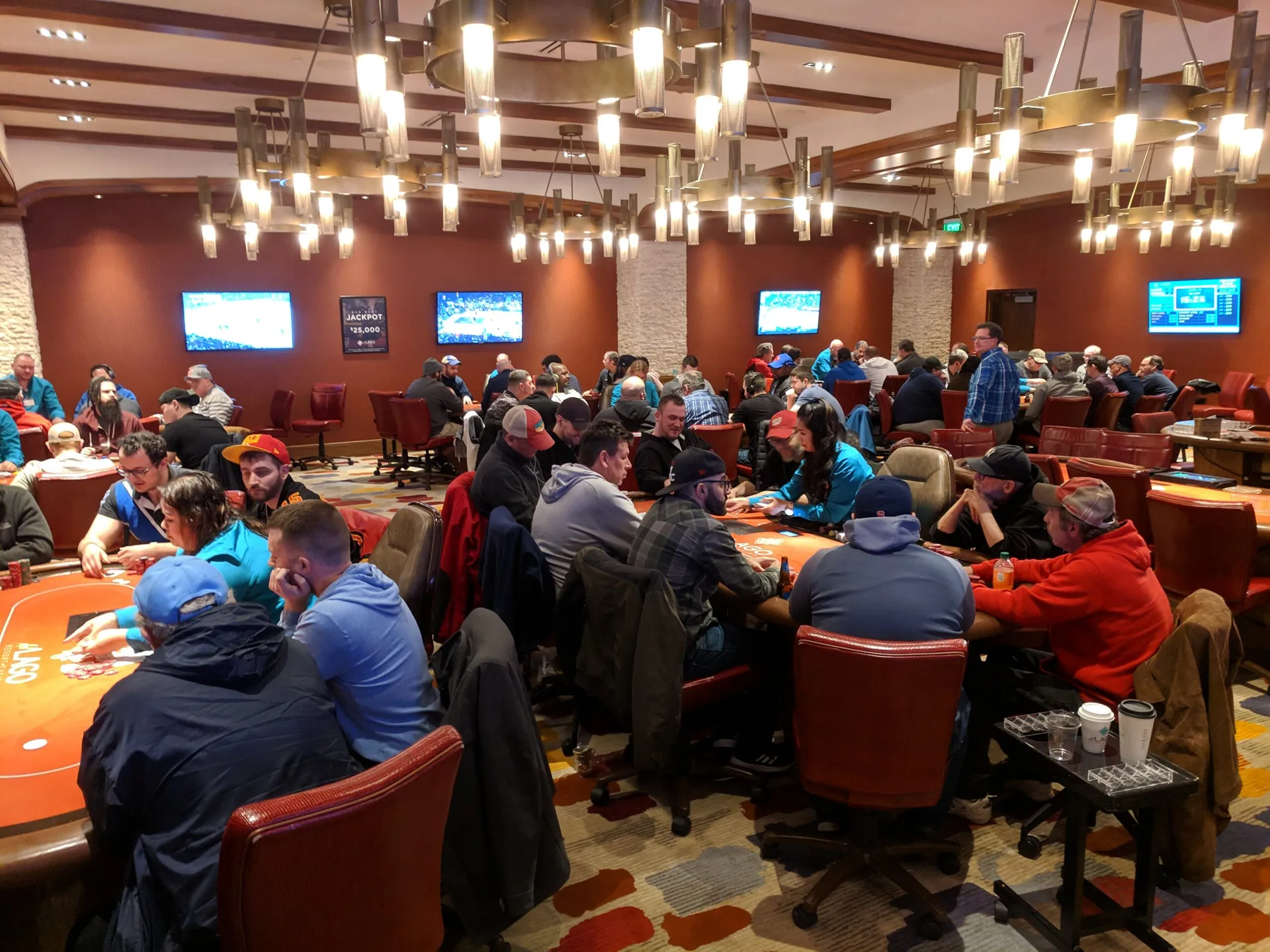
22,811 Entries in a $1K Event — Let That Sink In
Let’s start with the raw numbers. Event #63, the $1,000 Mystery Millions, ran 6 Day 1 flights and attracted a staggering 22,811 entries. When I first saw the number on Poker.org, I had to double-check. Twenty-two thousand, eight hundred and eleven people paid a thousand dollars to sit down and play poker. In a single event.
For context: this is the largest $1,000 buy-in event in the entire 57-year history of the WSOP. It’s the 4th largest WSOP event ever, period. The only events that drew more were sub-$500 mega-fields and Main Event-caliber tournaments.
The regular prize pool cleared $10 million, and the mystery bounty pool added another $6.8 million on top of that — bringing the total to approximately $16.8 million. A thousand-dollar buy-in tournament generating nearly $17 million in total prizes. Ten years ago, that would’ve sounded absurd.
Day 2 kicked off with 1,236 survivors. That’s a 94.6% elimination rate across the six Day 1 flights — over 21,500 players knocked out before the field even consolidated.
Why Mystery Bounty Is a Dopamine Machine
Here’s the thing about Mystery Bounty tournaments: they’re engineered to be addictive, and I mean that in the best possible way.
In a standard tournament, you grind for hours (sometimes days) and the real money doesn’t kick in until you’re deep in the field. Mystery Bounty flips that on its head. You knock someone out, you open an envelope, and it could be anything from $500 to $1,000,000. The uncertainty is what makes it electric.
I’ve played a handful of online Mystery Bounty events, and that moment between eliminating an opponent and seeing the bounty amount is genuinely one of the most exciting things in poker. My heart rate goes up every single time — even when the envelope turns out to be a min-bounty. Now imagine that feeling at the WSOP, with a million-dollar envelope floating somewhere in the room. No wonder 22,811 people showed up.
And this wasn’t even the first massive Mystery Bounty event this summer. The $550 Mini Mystery Millions (Event #1) at the start of the series drew 20,488 entries and was won by Philip Chun for $400,000. So WSOP ran two Mystery Bounty events, both north of 20K entries. The format isn’t just popular — it’s reshaping what “big” means in tournament poker.
The Million-Dollar Envelope: Andrew Shelton’s Story
Every Mystery Bounty event has that one marquee moment — someone pulls the top envelope. In Event #63, that someone was Andrew Shelton, who opened the $1,000,000 bounty.
Think about the math for a second. You pay $1,000 to enter. You knock out one opponent. You open an envelope. It says $1,000,000. That’s a 1,000x return on a single elimination. You don’t need to make the final table. You don’t need to outlast 22,000 other players. You just need to win one pot against the right person at the right time.
This is exactly why the format draws such massive fields. Every single player who sat down was thinking: “What if the next person I bust has the million-dollar bounty on their head?” That thought alone is more powerful than any marketing campaign WSOP could run.
What This Means for Regular Players
If you’re someone who plays $1/$2 cash games or small local tournaments, the Mystery Millions data actually reveals some actionable insights:
First, the player pool is softer than a standard $1K tournament. A huge chunk of those 22,811 entries came from recreational players chasing the bounty dream. If you have solid short stack push-fold fundamentals and tournament basics, your edge in these fields is likely higher than in a comparably priced conventional event. More recreational players in the pool = more profitable spots for skilled players.
Second, bounty tournaments require adjusted strategy. In a standard MTT, you tighten up near the bubble and play for pay jumps. In a Mystery Bounty, every elimination has standalone value — which means aggressive play gets rewarded more than usual. If you’re still applying pure ICM-based strategy to bounty events without adjusting for bounty equity, you’re leaving significant EV on the table. Understanding how to widen your calling and shoving ranges when bounties are in play is the key skill for these mega-fields.
Third, WSOP is leaning hard into the “poker festival” model. From the $550 Mini Mystery to the $1K Mystery Millions, the trend is clear: low buy-in + high-variance bounty mechanics + the chance at a life-changing prize = massive turnout. For serious grinders, this is excellent news. The more recreational players these events attract, the better the games get for everyone with an edge.
My Take
When I saw 22,811, my first reaction was: poker isn’t just back — it’s bigger than it’s ever been.
The pandemic crushed live poker in 2020, and for a few years the recovery felt slow, like we were inching back to pre-COVID levels without ever quite getting there. But 2026 WSOP numbers aren’t “recovery.” They’re setting new records. Event #1 hit 20K, Event #63 hit 22K+ — these are participation levels that never existed before 2026.
Mystery Bounty deserves the credit. WSOP finally cracked the code on a format that satisfies both ends of the spectrum. Recreational players get the lottery ticket fantasy of pulling a million-dollar envelope. Pros get a 22,000-player field stuffed with casual opponents. Everybody wins (well, except the 94.6% who busted Day 1).
My one concern: logistics. Running a 22,811-player tournament across 6 Day 1 flights is an enormous operational challenge. Dealers, floor staff, table availability, payout processing — everything needs to scale. If WSOP can maintain quality execution at this level of participation through the rest of the summer, they’ll have proven that the Mystery Bounty format isn’t a fluke but the new standard for mass-appeal poker events.
Either way, a $1,000 buy-in generating $16.8 million in prizes, with someone pulling a seven-figure bounty envelope — that’s what WSOP 2026 looks like. If you’ve been on the fence about making the trip to Vegas next summer, these numbers should settle the debate.
Frequently Asked Questions
What makes Mystery Millions different from a regular tournament?
The key difference is the bounty mechanic. In a regular tournament, all prize money comes from finishing positions. In a Mystery Bounty event, part of the buy-in goes into a bounty pool. Every time you eliminate a player, you open a random bounty envelope — it could be a few hundred dollars or up to $1,000,000. This adds a lottery-like element to every single elimination.
How did 22,811 players compete in one event?
Through multiple starting flights. Event #63 had 6 Day 1 flights, and players chose any one flight to enter. Each Day 1 played independently, and survivors from all flights merged on Day 2. A total of 1,236 players advanced to Day 2.
Can you really win $1 million from a $1,000 tournament?
Yes. Andrew Shelton pulled the $1,000,000 bounty envelope in this event. That’s a bounty reward, not a finishing position prize — meaning you don’t need to reach the final table to hit the top bounty. Of course, the vast majority of bounty envelopes contain much smaller amounts.
What was the Mini Mystery Millions (Event #1)?
A similar Mystery Bounty event with a lower $550 buy-in that ran at the start of the 2026 WSOP. It attracted 20,488 entries and was won by Philip Chun for $400,000. Together with Event #63, the two Mystery Bounty events drew over 43,000 combined entries.
Where does this rank among the biggest WSOP events ever?
Event #63’s 22,811 entries make it the 4th largest WSOP event in history. It’s the all-time record for any $1,000 buy-in WSOP event. The top three spots are held by lower buy-in events or Main Event fields.