Semi-Bluff Strategy in Poker: How to Bluff When You Still Have Outs
A semi-bluff is the most profitable bluff in poker — you bet with a drawing hand that can win two ways: your opponent folds, or you hit your draw and take down the pot. But timing is everything. Get it right and it’s a money printer; get it wrong and you’re lighting chips on fire.
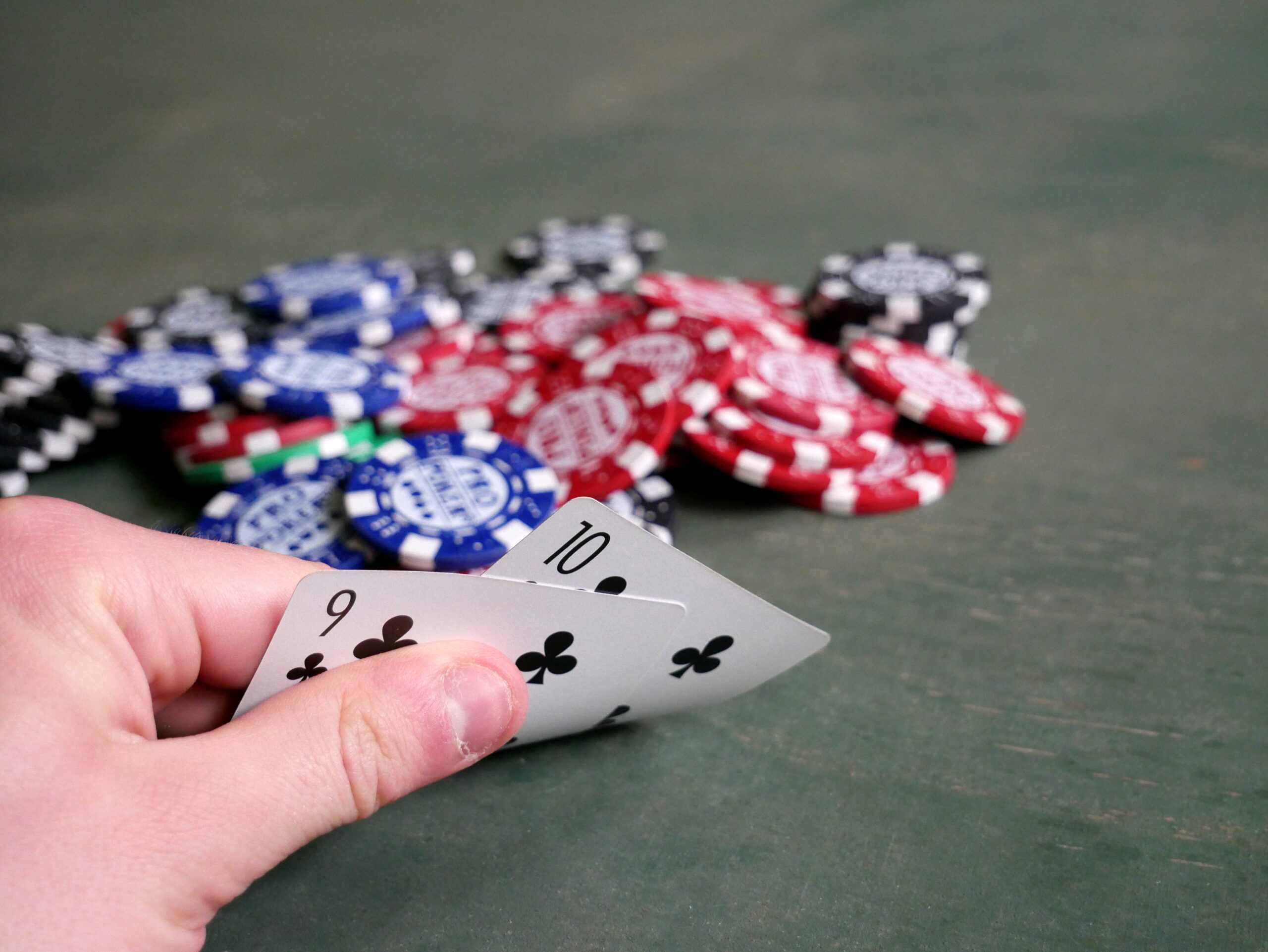
The moment semi-bluffing clicked for me was at a 1/2 live game. I flatted a CO open on the button with J♥T♥. Flop came 9♥6♥2♣. Villain c-bet half pot, and I raised it to 3x. My thinking: “I’ve got a flush draw plus overcards on a board that doesn’t connect with big-card ranges. Time to apply pressure.”
He tanked for about 20 seconds and folded. Told me later he had AKo — top of his range but zero pair on that board. Couldn’t handle the raise.
That hand taught me the beauty of the semi-bluff: if he folds, I win without risk. If he calls, I still have 9 flush outs plus overcards — roughly 45% equity to hit by the river. Either way, the math works in my favor.
What Is a Semi-Bluff? And Why It’s 100x Better Than a Pure Bluff
Let’s get the definitions straight.
Pure Bluff: Your hand has zero chance of improving. You’re betting with 3♦2♦ on an A♠K♠7♣ board. If called, you’re dead. Your only win condition is making your opponent fold.
Semi-Bluff: Your hand isn’t the best right now, but you have outs to improve. You’re betting A♠8♠ on K♠9♠4♣ — no made hand yet, but 9 spade outs for the nut flush plus 3 aces for top pair. You can win by making them fold OR by hitting your draw.
Pure Bluff vs Semi-Bluff
| Factor | Pure Bluff | Semi-Bluff |
|---|---|---|
| Current hand strength | Near zero | Behind but with outs |
| Ways to win | Opponent folds only | Opponent folds OR you hit |
| When called | Almost always lose | Still 20-45% equity |
| Risk/reward ratio | High risk, low reward | Medium risk, high reward |
| Recommended frequency | Rarely | Can be used frequently |
The math behind semi-bluffing is simple: fold equity + pot equity stack on top of each other. Even if your opponent only folds 30% of the time and you only have 35% equity when called, the combined expected value is positive. That’s why semi-bluffs are one of the most +EV plays in poker.
The Three Requirements for a Good Semi-Bluff
Not every drawing hand is a good semi-bluff. After losing chips to bad semi-bluffs early in my poker career, I settled on three non-negotiable conditions.
Requirement 1: Enough Outs (Minimum 8)
More outs means more equity when called, which means a bigger safety net for your semi-bluff.
Common Draws and Their Outs
| Draw Type | Outs | Hit on Turn | Hit on River | Flop to River |
|---|---|---|---|---|
| Flush Draw | 9 | 19.1% | 19.6% | 35.0% |
| Open-Ended Straight Draw (OESD) | 8 | 17.0% | 17.4% | 31.5% |
| Gutshot Straight Draw | 4 | 8.5% | 8.7% | 16.5% |
| Combo Draw (Flush + Straight) | 12-15 | 25-32% | 26-33% | 45-54% |
| Flush + Pair | 12-14 | 25-30% | 26-30% | 45-50% |
8 outs is the floor for a semi-bluff. Below that (like a gutshot with only 4 outs), your equity when called is too thin. A 4-out draw is better played passively — check-call for pot odds or just give up.
💡 Exception: If you estimate your opponent’s fold frequency is very high (60%+), even 4-5 outs can justify a semi-bluff. But this requires accurate reads.
Requirement 2: Your Opponent Can Actually Fold
This is the condition most players forget. If your opponent is a calling station who never folds, your fold equity is zero — and your semi-bluff is just a fancy way to build a pot with a drawing hand.
Semi-bluffs don’t work against:
- Calling stations: they call everything, so your fold equity is zero
- Short-stacked opponents near all-in: they have no room to fold
- Large pots with shallow remaining stacks: pot odds are too good for them to fold
Semi-bluffs work best against:
- TAGs (tight-aggressive players): they fold when they miss, giving you maximum fold equity
- Thinking regulars: they make rational fold/call decisions based on the board
Requirement 3: Position (Preferably In Position)
Semi-bluffing in position (IP) is dramatically better than out of position (OOP). Here’s why:
- IP lets you see your opponent act first — you can check behind for a free card when you want
- OOP, if your semi-bluff gets called, you’re stuck acting first on the turn with no information
- IP gives you pot control — you decide whether the pot stays small or grows
My personal guideline: I semi-bluff about twice as often in position as out of position. OOP semi-bluffs need stronger draws (12+ outs); IP, 8-9 outs is fine.
Flop Semi-Bluffs: Best Spots and Sizing
The flop is the golden window for semi-bluffs — you still have two streets to hit your draw, so your outs are worth the most.
Best Flop Textures for Semi-Bluffing
| Board Texture | Rating | Why |
|---|---|---|
| Two-tone + you have the flush draw | ★★★★★ | 9 outs + board looks threatening |
| Connected board + you have OESD | ★★★★ | 8 outs + opponents fear you already hit |
| Combo draw (flush + straight) | ★★★★★ | 12-15 outs, you’re barely behind even when called |
| High cards + backdoor draws only | ★★ | Too few outs, closer to a pure bluff |
| Paired board (e.g., 7-7-3) | ★ | Opponents rarely fold on paired boards |
Sizing Your Semi-Bluff
Standard flop semi-bluff sizing: 60-75% of the pot.
- 2/3 pot (67%): The default. Good balance between fold equity and risk
- 3/4 pot (75%): Use when opponents are sticky callers — give them worse odds
- 1/2 pot (50%): Against tight players who fold to any bet — save chips
💡 Critical rule: Your semi-bluff sizing must match your value bet sizing. If you value bet 2/3 pot, semi-bluff 2/3 pot. Any difference in sizing gives observant opponents a reliable tell.
Worked Examples
Example 1: Flush Draw Semi-Bluff
- Your hand: A♠8♠ (BTN)
- Flop: K♠7♠3♣ (pot: 8BB)
- Villain: CO opened preflop, you called
- Analysis: 9 spade outs + 3 aces for top pair = 12 outs. Two-tone board puts pressure on villain’s non-spade hands like QQ/JJ/TT
- Action: Villain c-bets 5BB → you raise to 15BB
- Outcomes: ①Villain folds → you win 13BB. ②Villain calls → pot is 38BB, you have ~35% equity to make the nuts
Example 2: OESD Semi-Bluff
- Your hand: 9♥8♥ (CO)
- Flop: T♣7♦2♠ (pot: 6BB)
- Villain: BB called your preflop raise
- Analysis: Any J or 6 completes your straight = 8 outs. Dry board means BB’s wide calling range misses a lot here
- Action: You c-bet 4BB (2/3 pot)
- Outcomes: ①Villain folds → you win 6BB. ②Villain calls → pot is 14BB, 31.5% to hit by the river
Turn Decisions: Fire Again or Shut Down?
After your flop semi-bluff gets called, the turn is the critical decision point. Most players make one of two extreme mistakes:
- Mistake 1: Auto-fire the turn — betting regardless of the card, bloating the pot with a draw that’s running out of streets
- Mistake 2: Always give up — checking every turn after a flop semi-bluff, essentially announcing “I was bluffing”
The correct approach is to let the turn card dictate your decision:
Turn Decision Framework
| Turn Situation | Action | Reasoning |
|---|---|---|
| Draw completed (hit flush/straight) | Value bet (no longer a semi-bluff) | You have the goods now |
| Scare card for villain’s range | Continue semi-bluffing | Fold equity just increased |
| Blank card (changes nothing) | 12+ outs: continue. ≤8 outs: check | More outs = worth one more barrel |
| Turn strengthens villain’s range | Check/give up or check-call | Fold equity dropped, don’t force it |
What Counts as a Scare Card?
A scare card is any card that weakens a large portion of your opponent’s range. Examples:
- Flop is K♠7♠3♣, you’re semi-bluffing a flush draw. Turn: A♠ — completes flushes AND is an overcard. Villain holding KQ/KJ is under massive pressure
- Flop is T♣7♦2♠, you’re drawing to a straight. Turn: Q♣ — a new overcard makes mid-pairs (88/99) very uncomfortable facing continued aggression
When a scare card hits, even if you didn’t improve, your fold equity spikes — because villain doesn’t know whether you hit or not.
Five Deadly Semi-Bluff Mistakes
Mistake 1: Semi-Bluffing a Calling Station
This is the most common and most expensive error. A calling station’s defining trait is “they call everything.” Against them, your fold equity is zero — your semi-bluff degrades into just a draw with inflated pot risk.
I had an opponent at NL25 online: VPIP 58%, Fold to C-bet 15%. I semi-bluffed draws against him three hands in a row, got called all three times, missed two, and lost 60BB. After that I made a rule: if an opponent folds less than 30% of the time, no semi-bluffs.
Mistake 2: Semi-Bluffing Multiway
Semi-bluffs work best heads-up. In a 3+ way pot, you need ALL opponents to fold — the probability drops sharply.
If each opponent folds 40% of the time: heads-up that’s 40% fold equity. Three-way, both folding = 40% × 40% = 16%. Your fold equity crashed from 40% to 16%.
In multiway pots, only combo draws (12+ outs) justify a semi-bluff.
Mistake 3: Semi-Bluffing With Too Few Outs
A gutshot with 4 outs has only 16.5% equity when called. You’re investing chips with an 84% chance of losing them. That’s not a semi-bluff — that’s charity.
Floor: 8 outs heads-up, 12 outs multiway.
Mistake 4: Inconsistent Sizing
If you always value bet 2/3 pot but semi-bluff 1/3 pot, good opponents will notice the pattern instantly. Keep your sizing identical across value bets and bluffs.
Mistake 5: No Turn Plan
A semi-bluff isn’t a single decision — it’s a multi-street plan. Before firing the flop, you should already know:
- Which turn cards do I fire again on?
- Which turn cards do I check?
- If I check and villain bets, do I call or fold?
A semi-bluff without a turn plan is gambling.
The Math: Why Semi-Bluffs Are +EV
Some players think semi-bluffing is “just gambling.” It’s not — the math is crystal clear.
Scenario Setup
- Pot: 10BB
- Your bet: 7BB (70% pot)
- Your outs: 9 (flush draw, ~35% equity flop to river)
- Opponent fold frequency: 40%
Expected value calculation:
Opponent folds (40%): You win 10BB
Opponent calls (60%): Pot becomes 24BB
- You hit (35%): Win 24BB – 7BB = +17BB
- You miss (65%): Lose 7BB
Total EV = 40% × 10 + 60% × (35% × 17 – 65% × 7)
= 4.0 + 60% × (5.95 – 4.55)
= 4.0 + 0.84 = +4.84BB
Every semi-bluff in this spot is worth +4.84BB — more than most value bets. This is why strong players semi-bluff far more often than you’d expect.
💡 Key insight: Even if fold frequency drops to just 20%, a 9-out semi-bluff is still +EV (~+1.2BB). The combination of fold equity and pot equity creates a positive expectation across a wide range of scenarios.
Advanced: Building a Balanced Betting Range
At higher stakes, the question isn’t just “should I semi-bluff?” but “is my betting range properly balanced between value and bluffs?”
Why Balance Matters
If you only bet strong hands, good opponents always fold — you never get paid. If you only bluff, they always call — you bleed chips. The solution: your betting range should contain both value hands and semi-bluffs.
Approximate GTO ratios:
| Street | Value Bet % | Bluff/Semi-Bluff % | Logic |
|---|---|---|---|
| Flop | ~50-60% | ~40-50% | Two streets left to hit, high bluff frequency |
| Turn | ~60-70% | ~30-40% | One street left, bluff frequency contracts |
| River | ~65-75% | ~25-35% | No more draws, pure bluff ratio lowest |
On the flop, up to 40-50% of your bets should be draws. If that sounds high, your flop betting range is probably too narrow and too value-heavy.
Which Draws to Semi-Bluff With
- Prioritize draws with backdoor value: Flush draw + overcards gives you multiple ways to win, not just one
- Prioritize draws with blockers: Holding A♠x♠ on a two-spade board blocks your opponent from having the nut flush draw
- Save your weakest draws for passive lines: Gutshots (4 outs) are better played as check-calls, not as semi-bluff leads
Adjustments by Game Type
Cash Games vs Tournaments
| Factor | Cash Games | Tournaments |
|---|---|---|
| Semi-bluff frequency | Higher — chips are replaceable | Lower — every chip matters |
| Preferred sizing | 2/3 to 3/4 pot | 1/2 to 2/3 pot (more conservative) |
| Key consideration | Maximize long-term EV | ICM pressure, chip preservation |
| Bubble play | N/A | Semi-bluff value spikes — opponents are terrified of busting |
Tournament bubbles are semi-bluff paradise — opponents desperately want to cash and will overfold. But avoid targeting big stacks who can afford to call.
Deep Stacks vs Short Stacks
- Deep (100BB+): Maximum semi-bluff potential. Combo draws are especially valuable because there’s enough stack depth for multi-street play
- Short (30BB or less): Limited semi-bluff space. A single bet may commit you to all-in. Better to use push/fold math than try to semi-bluff with finesse
Frequently Asked Questions
Q1: Flush draw or straight draw — which is better for semi-bluffing?
Flush draws (9 outs) are slightly better than OESDs (8 outs), but the bigger difference is this: a completed flush is almost always the nuts, while a completed straight might not be the best straight. Flush draws have better implied odds because you get paid more when you hit.
Q2: Are backdoor draws worth semi-bluffing?
A pure backdoor draw (needing turn AND river) by itself isn’t enough to justify a semi-bluff. But if your backdoor draw combines with other equity (two overcards, for example) to reach 8+ total outs, then yes — it’s viable.
Q3: What if my semi-bluff gets raised?
Depends on your outs and pot odds:
- Combo draw (12+ outs): Consider re-raising or calling — your equity supports it
- Standard flush/straight draw (8-9 outs): Call if pot odds are right, fold if not. Don’t re-raise — that’s pure gambling
- Weak draw (4-6 outs): Fold, no regrets
Q4: How often should beginners semi-bluff?
If you’re new to the concept, start with the textbook spots: heads-up, in position, 9+ outs. Look for 2-3 opportunities per session. Don’t force it — master the best spots first, then gradually expand.
The Semi-Bluff Checklist
Before pulling the trigger on any semi-bluff, run through this list:
- ✅ Do I have 8+ outs?
- ✅ Can my opponent actually fold? (Not a calling station)
- ✅ Am I in position? (Or do I have 12+ outs if OOP)
- ✅ Is my sizing consistent with my value bets?
- ✅ Do I have a turn plan? (Which cards I barrel, which I check)
All five checked? Pull the trigger. Missing two or more? Play it safe. The power of the semi-bluff lies in choosing the right moment — not every draw deserves aggression, but when the conditions align, don’t hesitate.