How to Beat Low Stakes Cash Games: A 1/2 and 2/5 Strategy Guide That Actually Works Against Bad Players
The fastest way to beat low stakes cash games is to stop trying to play “correctly” and start playing exploitatively. Your opponents at 1/2 and 2/5 are making massive mistakes — calling too much, bluffing too little, and playing too passively. Your job is to punish those mistakes with relentless value betting, minimal bluffing, and ruthless table selection.
I spent my first year at 1/2 trying to play like the guys on the Poker After Dark reruns — mixing in check-raises, balancing my ranges, throwing in the occasional “sick bluff” on the river. My win rate? Barely break-even. Then one night, an older regular who’d been quietly stacking chips for hours told me something that changed everything: “Kid, you’re playing a $10 game with $100 strategies. Nobody here knows what a range is. Just bet your good hands big and fold the rest.”
He was right. I simplified my game, stopped trying to be clever, and my win rate jumped from 2 BB/hr to 12 BB/hr within a month. That was three years ago, and I’ve since moved up to 2/5 and occasionally 5/10. Everything I’m about to share is what I wish someone had told me before I burned through my first bankroll trying to play “optimal” poker against people who call river bets with third pair.
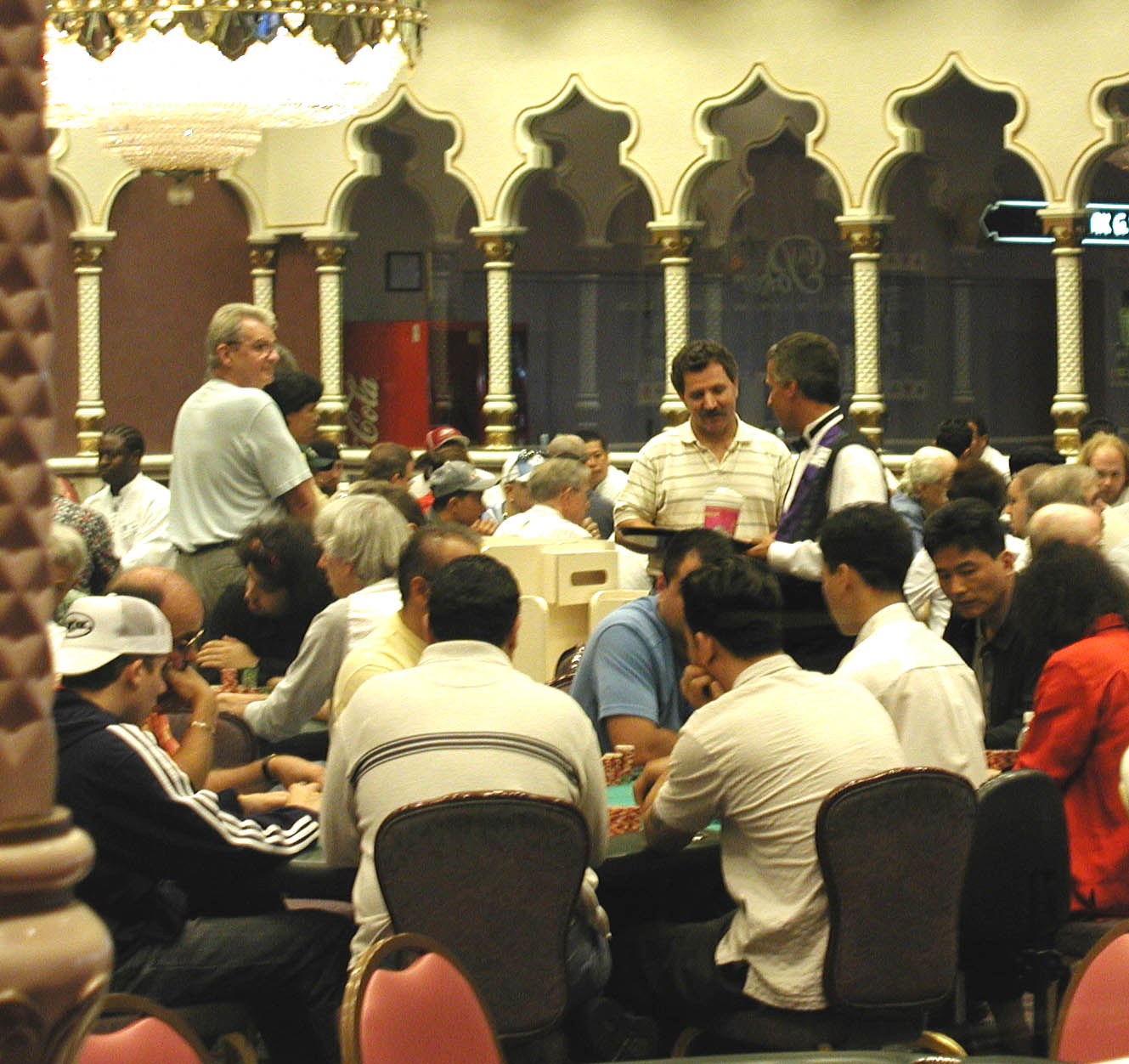
Know Your Opponents: The Four Player Types You’ll Face at 1/2 and 2/5
Before you adjust your strategy, you need to understand who’s sitting at your table. Low stakes games are populated by four recurring player types, and each one leaks money in a different way.
The Calling Station (Loose Passive)
This is your ATM. The calling station limps preflop with hands like K♦6♠, calls your raise with Q♣8♥, and then calls three streets on an A♠7♦2♣ board with middle pair because “they might have been bluffing.” I once watched a calling station call a $200 river bet into a $150 pot with 9-high — and then say “I had a feeling” when they lost.
Against calling stations, your entire strategy is simple: value bet relentlessly and never bluff. They will pay you off with worse hands far more often than you think.
The Nit (Tight Passive)
Usually an older player who sits down with the minimum buy-in and only plays premium hands. When a nit raises, they have at least top pair top kicker, and when they 3-bet, they have AA or KK — every single time. I’ve folded QQ face-up against a 1/2 nit’s 4-bet, and they showed me aces with a confused look.
Against nits: steal their blinds aggressively and fold to their aggression. Don’t try to bluff them off pots — they’re barely in any pots to begin with.
The Maniac
Every table has one — the player who raises to 8x preflop, bets every flop, and shoves all-in on the turn with middle pair and a gutshot. Maniacs create enormous variance, but they’re long-term losers. The trick is emotional control: they’ll beat you in some wild pots, but the math is heavily in your favor.
Tighten up and let them hang themselves. Call down lighter than normal with top pair or better, and let them donate their stack.
The “YouTube Reg”
This player watched a few coaching videos and now thinks they’re playing 25/50 online. They’ll 3-bet light, fire C-bets into four-way pots, and attempt “polarized river overbets” at 1/2 — where nobody knows what polarized means. Their problem is applying advanced concepts in a game where nobody is playing well enough for those concepts to work.
Call them down more frequently — their bluff-to-value ratio is way off because they’re bluffing at frequencies designed for tougher games.
Quick Reference: Player Type Adjustments
| Player Type | Preflop Tell | Postflop Tell | Your Counter-Strategy |
|---|---|---|---|
| Calling Station | Limps wide, calls raises | Calls with any pair/draw | Max value bet, zero bluffs |
| Nit | Rarely enters pots | Raise = monster | Steal blinds, fold to raises |
| Maniac | Opens/3-bets constantly | Bets and raises too often | Tighten up, call down light |
| YouTube Reg | Uses “correct” sizing | Overbluffs, fancy plays | Widen calling range |
Why GTO Doesn’t Print Money at Low Stakes
Let me be clear: GTO (Game Theory Optimal) strategy is theoretically correct. The problem is that it’s designed for a world where your opponents are also playing close to optimally. At 1/2 and 2/5, they absolutely are not.
Here’s a concrete example. GTO might tell you to bluff the river with A♠5♠ on a K♣Q♦7♥4♠2♣ board at a certain frequency, because a balanced opponent would fold enough to make it profitable. But the guy in seat 3 at your local card room called with K♦3♣ preflop and is never — literally never — folding a pair of kings on the river. Your “theoretically correct” bluff just cost you $150.
The flip side is equally important. GTO tells you to check some strong hands to protect your checking range. But if your opponents barely bluff when checked to, you’re just losing value by not betting. At 1/2, I bet top pair on every street because my opponents call with worse — and I don’t need a balanced checking range because they’re not paying attention to my frequencies.
The correct approach at low stakes is exploitative poker: identify each opponent’s biggest leak and attack it directly. For foundational cash game skills, check out this guide on cash game tips for beginners.
Five Adjustments That Will Transform Your Win Rate
1. Value Bet Thicker Than You’re Comfortable With
At NL200 online, betting three streets with top pair medium kicker is often too thin. At live 1/2? It’s a money printer.
I’m talking about hands like A♥T♣ on an A♦8♣3♠ board. At higher stakes, you might check the river for pot control. At 1/2, you bet 70% pot on every street because someone is calling with A♦4♠ or even K♣Q♣ “just to see.” Last week I got three streets of value with A♥9♠ on an A♣K♦7♠4♥2♦ board — my opponent called the river with A♣3♣. That would never happen at 5/10.
Rule of thumb: if you think there’s a 35%+ chance your opponent will call with a worse hand, bet. At low stakes, that threshold is met far more often than you’d expect.
2. Cut Your Bluffing by at Least 50%
This is the single most impactful change you can make. I tracked my own stats for three months and found that my river bluffs at 1/2 succeeded only 28% of the time — you need at least 50% success rate for most bluffs to break even.
The math is unforgiving: if your bluffs work 30% of the time and you’re betting pot-sized, you’re losing 40 cents on every dollar you invest in bluffs. Multiply that by 3-4 bluffs per session and it adds up fast.
When should you bluff at low stakes? Only when you have a specific, evidence-based reason to believe your opponent will fold — like a nit who only continues with top pair or better on a scary board. Never bluff a calling station. Never bluff a maniac. And definitely don’t bluff into multi-way pots.
3. Size Up Your Isolation Raises
Low stakes games have a limping epidemic. You’ll routinely see 4-5 limpers before the action gets to you. The standard “3x + 1 per limper” raise size doesn’t work here because low stakes players don’t fold to small raises — they’ve already put money in and want to “see a flop.”
My sizing at 1/2: I raise to $15-20 with zero limpers, and add $5 for each limper. With three limpers, I’m raising to $30-35 with a hand like K♠Q♠. Yes, that’s 15-17 BB. It sounds huge, but I consistently get 1-2 callers, which means I’m going to a flop heads-up or three-way with position and a range advantage.
If you raise to $10 with three limpers in front of you, you’ll get five callers and your premium hand just became a coin flip.
4. Stop Slow-Playing — It’s Costing You Money
I used to slow-play sets all the time. Flop a set of sevens? Check, hoping someone bets so I can raise. The result? Everyone checks behind, a scary turn card comes, and the pot stays small.
At low stakes, your opponents call but don’t bet. If you check, they check behind with hands they would have called a bet with. You’re literally leaving money on the table every time you slow-play.
My current rule: I never slow-play at 1/2 or 2/5. If I flop a set, I bet. If I turn the nut flush, I bet. The only exception is if a maniac is in the pot and I’m confident they’ll bet if I check — but even then, I usually just lead out because I don’t want to risk a check-check.
5. Be Ruthless About Table Selection
This is the most underrated edge in low stakes poker. Not all 1/2 tables are created equal. A table with three calling stations and two nits is a goldmine. A table with five solid regulars is a breakeven grind at best.
When you walk into a card room, watch for five minutes before you sit down. Look for tables with big pots, lots of limping, and players who are laughing and having fun — they’re not there to play their A-game. Avoid tables where everyone is staring at their phones between hands and using standard raise sizes — that’s a reg-infested table.
For a deeper dive into this crucial skill, read about table selection strategy.
The Three Biggest Leaks at Low Stakes (And How to Plug Them)
Leak #1: Fancy Play Syndrome
Check-raise bluffing the flop, floating the turn to bluff the river, making “thin value bets” with marginal hands — all of these plays have a place in poker, but that place is not the 1/2 table at your local card room on a Saturday night.
Your opponents are not thinking about your range. They’re thinking about their own cards. That K♦Q♦ you just check-raised as a semi-bluff? They’re calling with bottom pair because “you might be bluffing.” And they’re right — you were.
The most profitable strategy at low stakes is boring: bet when you have it, fold when you don’t, and resist the urge to get creative. Creativity is a luxury you earn at higher stakes.
Leak #2: Tilting After Bad Beats
Here’s a hand from last month: I raise preflop with A♠A♥, get two callers. Flop comes J♦7♣2♠ — great. I bet $45 into $60, one caller. Turn 5♣, I bet $100, call. River 3♦ — a total brick. I shove for $180, he snap-calls with… 6♠4♠. He called a preflop raise and two postflop bets with a gutshot and backdoor nothing, and got there on the river.
I was furious for about 30 seconds. Then I reminded myself: that player just made four terrible decisions in one hand. His preflop call was bad, his flop call was bad, his turn call was bad, and he only won because the river bailed him out. I want him at my table every single session, because over 100 hands, I will have his entire stack.
Bad beats happen more at low stakes because opponents play more trash hands. But those same trash hands are what make the games so profitable. You can’t have one without the other. For managing the emotional side, take a look at cash game session management.
Leak #3: Playing Too Many Tables or Hours
Online players who transition to live often get bored at the pace and start playing their phones, zoning out, or playing too many hands out of sheer impatience. Live poker is slow — maybe 25-30 hands per hour versus 60-80 online. But every hand you play while distracted or tired is a hand where you’re making suboptimal decisions.
Set hard limits: no more than 6-8 hours in a session, take a 15-minute break every 2 hours, and quit when you notice yourself getting frustrated or bored. A tired player is a losing player, regardless of skill level.
When to Move Up: From 1/2 to 2/5
The jump from 1/2 to 2/5 is the most common — and most dangerous — transition in live poker. I’ve seen winning 1/2 players go broke at 2/5 because they moved up too early, too aggressively, or without the right preparation.
Moving Up Checklist: Are You Ready for 2/5?
| Requirement | Minimum | Recommended |
|---|---|---|
| Win Rate at 1/2 | 10 BB/hr over 500+ hours | 15+ BB/hr over 1,000 hours |
| Bankroll for 2/5 | 20 buy-ins ($10,000) | 30 buy-ins ($15,000) |
| Financial Comfort | Can lose $500 without stress | Can lose $1,500 without blinking |
| Emotional Readiness | Handled 10+ BI downswing at 1/2 | Have a documented tilt management plan |
A few things that surprised me about 2/5 when I first moved up:
- The fish are still there — 2/5 has plenty of recreational players with bigger bankrolls. The games are beatable for similar reasons as 1/2.
- The regs are better but not great — they make fewer fundamental errors, but most are still far from optimal. They’ll fold to river bluffs more than 1/2 players, which means you can selectively add bluffs back into your game.
- The swings are real — a bad night at 2/5 can mean losing $1,500+. If that number makes your stomach turn, you’re not ready.
For a comprehensive framework on managing your poker money across stakes, see the bankroll management guide.
Your Action Plan Starting Tonight
- Track your bluff success rate for 10 sessions — write down every river bluff and whether it worked. If you’re below 50% success, cut your bluffing in half.
- Label every opponent within 15 minutes of sitting down — calling station, nit, maniac, or YouTube reg. Adjust your strategy accordingly.
- Increase your isolation raise sizing — go to 5 BB + 1 per limper minimum. If your current sizing isn’t getting it heads-up, it’s too small.
- Bet 70-100% pot with strong value hands — stop pot controlling against people who don’t notice bet sizes.
- Set a hard stop-loss at 3 buy-ins per session — walk away, no exceptions. The game will be there tomorrow.
- Spend 5 minutes watching before you sit at any table — the right table is worth more than the right cards.
Low stakes cash games aren’t solved by studying GTO charts or watching high stakes training videos. They’re beaten by paying attention to who’s at your table, exploiting their specific mistakes, and having the discipline to play a simple, value-heavy game. It’s not glamorous, but it’s profitable — and profitable beats glamorous every day of the week.