Texas Hold’em Pot Odds Explained: The Complete Guide to Poker Math
Key takeaway: Pot odds are the single most important mathematical concept in poker. Once you internalize this one skill, you’ll stop making the #1 mistake that losing players make — calling when you shouldn’t, and folding when you should call.
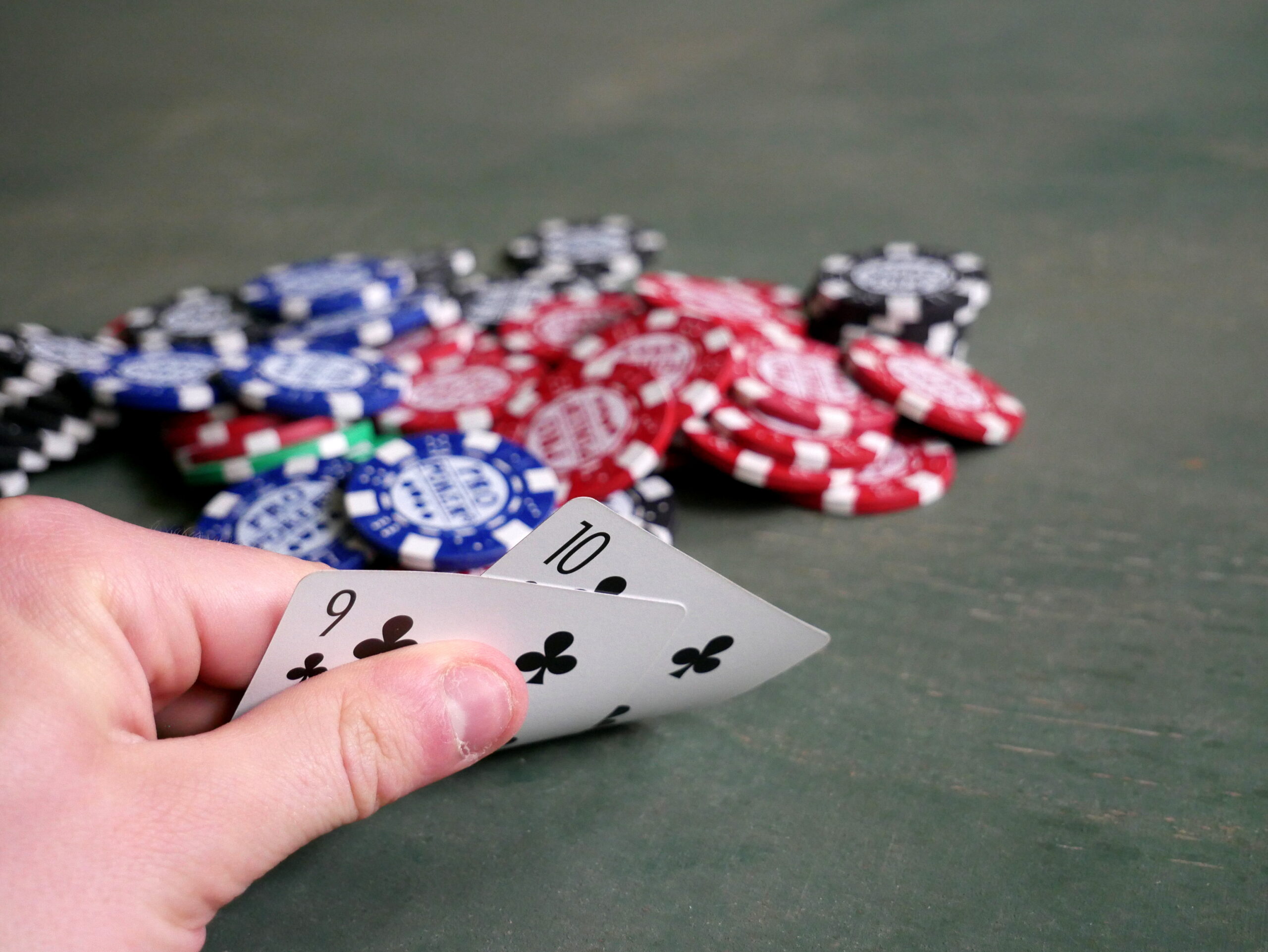
I spent my first two years playing poker without really understanding pot odds. Sure, I’d heard the term thrown around, but I was making decisions based on gut feeling. “This feels like a good call” or “I think he’s bluffing” — that was my entire strategy. Once I actually sat down and learned the math, my win rate at NL100 went from -3bb/100 to +5bb/100 in about three months. The math isn’t complicated. It’s arithmetic you learned in middle school.
What Are Pot Odds, Exactly?
Pot odds are the ratio between the current pot size and the cost of your call. They tell you the minimum win percentage your hand needs to make calling profitable.
Formula: Pot Odds = Call Amount / (Pot + Call Amount)
Example: The pot is $80. Your opponent bets $20. The total pot is now $100, and you need to call $20. Your pot odds are:
$20 / ($100 + $20) = $20 / $120 = 16.7%
This means your hand only needs to win more than 16.7% of the time for a call to be profitable. If you have a flush draw (roughly 35% to hit by the river on the flop), calling is a very easy decision.
How to Calculate Pot Odds Step by Step
Let me walk you through the exact process I use at the table. It’s three simple steps, and once you’ve done it a few dozen times, it becomes automatic.
Step 1: Count the total pot. Add up everything already in the middle — blinds, antes, and all bets from previous rounds. Let’s say the pot is $60 after the flop betting round.
Step 2: Note your opponent’s bet. Your opponent bets $30 into that $60 pot. The total pot is now $90 (the original $60 + their $30 bet).
Step 3: Divide your call by the total pot including your call. You’d need to call $30. The total pot after your call would be $120 ($90 + your $30). So your pot odds are:
$30 / $120 = 25%
That 25% is your break-even point. If your hand wins more than 25% of the time, calling is profitable over the long run.
Here’s a second worked example to really lock it in. You’re in a $1/$2 cash game. The pot is $45 on the turn. Your opponent shoves all-in for $15 — a small bet relative to the pot. Total pot becomes $60, you call $15: that’s $15 / $75 = 20%. You only need to win one in five times to break even. With a gutshot straight draw (about 8.5% on one card), this is still a fold — but if you also have a backdoor flush draw or overcards that add a few more outs, it could tip the scale. This is why counting outs matters so much.
For a deeper dive into doing this math quickly without pausing to think, check out our pot odds mental math shortcuts guide — it covers the tricks pros use to run these numbers in under 3 seconds.
How to Count Your Outs
Before you can use pot odds, you need to know how often your hand will improve. This is where “outs” come in — cards remaining in the deck that will give you the winning hand.
| Draw Type | Outs | Flop to Turn | Flop to River |
|---|---|---|---|
| Flush draw (4 to a flush) | 9 | 19.1% | 35.0% |
| Open-ended straight draw | 8 | 17.0% | 31.5% |
| Gutshot straight draw | 4 | 8.5% | 16.5% |
| Two overcards | 6 | 12.8% | 24.1% |
| Flush + straight combo draw | 15 | 31.9% | 54.1% |
| Set to full house/quads | 7 | 14.9% | 27.8% |
The Quick Math Shortcuts
You don’t need a calculator at the table. Use these shortcuts:
- Rule of 2: Multiply your outs by 2 to estimate your chance of hitting on the next card. Example: 9 outs × 2 = ~18% (actual: 19.1%)
- Rule of 4: On the flop with two cards to come, multiply outs by 4. Example: 9 outs × 4 = ~36% (actual: 35.0%)
These rules are accurate enough for real-time decisions. I’ve been using them for years and they’ve never steered me wrong in a meaningful way.
Putting It All Together: The Decision Framework
Here’s the step-by-step process I use every time I face a bet with a drawing hand:
- Count your outs — How many cards improve your hand to a winner?
- Calculate your equity — Use the Rule of 2 (one card) or Rule of 4 (two cards)
- Calculate pot odds — Call amount / (pot + call amount)
- Compare — If your equity > pot odds, call. If not, fold.
Real Hand Example
Last week I played a hand at NL200 online that perfectly illustrates this:
I hold A♠7♠ on a flop of K♠9♠2♥. I have the nut flush draw — 9 outs to the best possible flush. My opponent bets $15 into a $20 pot.
Step 1: 9 outs (any spade except those on the board)
Step 2: 9 × 2 = 18% on the turn (or 9 × 4 = 36% by the river)
Step 3: $15 / ($35 + $15) = $15 / $50 = 30%
Step 4: My equity to the turn (18%) is less than the pot odds (30%). BUT — using the Rule of 4 for two cards, my equity is 36%, which beats the 30%. The problem is I might face another bet on the turn.
The correct play here depends on implied odds — if I hit my flush, how much more can I extract? Against this opponent (who I knew was aggressive), I estimated I could win at least another $40 if I hit. That extra $40 in “implied odds” made the call clearly profitable. I called, hit the flush on the turn with the 5♠, and won a $120 pot after my opponent couldn’t fold his K-Q.
Pot Odds vs Implied Odds: What’s the Difference?
This is one of the most common points of confusion I see in poker forums. Pot odds and implied odds are related but answer different questions.
Pot odds only look at the money currently in the pot. They answer: “Given what’s already out there, is my call profitable right now?”
Implied odds factor in the money you expect to win on future streets if you hit your draw. They answer: “Even if pot odds say fold, will I make enough extra money later to justify calling now?”
Here’s when each one matters:
- Use pot odds alone when you’re facing an all-in bet (no future streets), when stacks are short, or when the board is scary enough that your opponent won’t pay off your made hand.
- Factor in implied odds when stacks are deep, your draw is hidden (gutshot straights are the classic example), and your opponent has a strong hand they’re unlikely to fold.
The mistake I see most often: players use implied odds as an excuse to call with bad pot odds in every situation. “I’ll make it up later” only works when “later” actually exists — deep stacks, an opponent willing to pay off, and a hidden draw. If any of those conditions are missing, stick with pot odds.
For a mathematical framework on when calling is profitable in the long run, our guide on EV (expected value) mental math breaks it down with concrete formulas you can use at the table.
Implied Odds: The Advanced Layer
Pot odds alone don’t tell the full story. Implied odds account for the additional money you expect to win on future streets if you hit your draw.
When implied odds are high:
- Your draw is hidden (e.g., gutshot straights — opponents don’t see them coming)
- Your opponent has a strong but second-best hand (likely to call big bets)
- Stacks are deep relative to the pot
When implied odds are low:
- Your draw is obvious (four to a flush on board — opponents won’t pay you off)
- Short stacks — not enough chips behind to compensate
- Opponent is tight and will fold when the draw completes
I learned this the hard way. I used to chase every flush draw, even when the board was three-suited and my opponent would obviously fold to any river bet. Implied odds of zero make even a “good” draw unprofitable.
Common Pot Odds Mistakes That Cost You Money
After coaching a few friends through their first year of poker, I’ve noticed the same mistakes come up over and over. Each one costs real money.
- Forgetting to include your own call in the pot total. This is the #1 arithmetic error. If the pot is $80 and your opponent bets $20, the total pot after your call is $120, not $100. Your pot odds are $20/$120 = 16.7%, not 20%. Getting this wrong consistently means you’re calling too tight in some spots and too loose in others.
- Ignoring reverse implied odds. Sometimes hitting your draw still loses — and costs you even more money. Drawing to a non-nut flush when someone could have a higher flush, or making a straight on a board that also completes a flush. In these spots, you “improve” your hand and then lose a bigger pot. Always ask: “If I hit, am I confident I have the best hand?”
- Calling with bad odds “because it’s suited.” Having two suited cards gives you a backdoor flush draw worth roughly 1-2 extra outs — not the 9 outs of a real flush draw. I’ve watched players call huge bets on the flop holding 7♠2♠ on a K♥9♦3♣ board and say “but it’s suited!” Suited-ness adds marginal value, not a license to call everything.
- Using the Rule of 4 when facing a single-street decision: If the bet is on the turn (one card to come), use the Rule of 2, not the Rule of 4. The Rule of 4 only applies on the flop when you’re all-in or certain to see both remaining cards.
- Counting outs that don’t actually win: If you have a flush draw but your opponent might have a higher flush draw, some of your “outs” are actually losing cards. Discount your outs in these situations.
- Only thinking about draws: Pot odds apply to ALL decisions, not just draws. If you have bottom pair and think there’s a 25% chance your opponent is bluffing, you still compare that 25% to your pot odds.
If you’re working on playing draws correctly — knowing when to call, raise, or fold — our guide to playing draws covers the strategic side that complements the math here.
Quick Reference: Common Scenarios
| Opponent Bets | Your Pot Odds | Minimum Equity Needed |
|---|---|---|
| 25% pot (quarter pot) | 16.7% | Most draws are profitable |
| 33% pot (third pot) | 20% | Gutshots still close |
| 50% pot (half pot) | 25% | Need 6+ outs minimum |
| 66% pot (two-thirds) | 28.5% | Flush draws profitable, gutshots fold |
| 100% pot (full pot) | 33.3% | Need flush draw+ or combo draw |
| 150% pot (overbet) | 37.5% | Only strong draws or made hands |
I keep this table mentally bookmarked. After a while, these numbers become second nature and you don’t even need to calculate anymore.
Outs to Pot Odds: Quick-Reference Table
This is the table I wish someone had given me when I started. It shows how many outs translate to what winning percentage, so you can instantly compare against the pot odds you’re being offered. Bookmark this or screenshot it for your next session.
| Outs | Hit % (Turn only) | Hit % (Turn + River) | Min Pot Odds Needed | Common Draw |
|---|---|---|---|---|
| 4 | 8.5% | 16.5% | ~8-17% | Gutshot straight |
| 5 | 10.6% | 20.4% | ~11-20% | Gutshot + one overcard |
| 6 | 12.8% | 24.1% | ~13-24% | Two overcards |
| 7 | 14.9% | 27.8% | ~15-28% | Set to full house/quads |
| 8 | 17.0% | 31.5% | ~17-32% | Open-ended straight draw |
| 9 | 19.1% | 35.0% | ~19-35% | Flush draw |
| 10 | 21.3% | 38.4% | ~21-38% | Flush draw + gutshot |
| 11 | 23.4% | 41.7% | ~23-42% | Flush draw + one overcard |
| 12 | 25.5% | 45.0% | ~26-45% | Flush draw + OESD (no overlap) |
| 13 | 27.7% | 48.1% | ~28-48% | Flush + straight combo |
| 14 | 29.8% | 51.2% | ~30-51% | Monster combo draw |
| 15 | 31.9% | 54.1% | ~32-54% | Nut flush draw + open-ender |
Use the “Turn only” column when you’re facing a bet and might face another bet on the river. Use the “Turn + River” column only when you’re facing an all-in on the flop or are confident you’ll see both remaining cards for free.
Want to plug in your exact hand and see the numbers? Try our Texas Hold’em Odds Calculator — it runs the simulations for you in real time.
Frequently Asked Questions
What’s the difference between pot odds and equity?
Pot odds tell you the price you’re getting to call. Equity tells you how often you’ll win. You compare the two: if equity > pot odds, the call is profitable. Think of pot odds as the “price” and equity as the “value.”
Should I always call when pot odds are in my favor?
Almost always, yes — in the long run. There are rare exceptions where reverse implied odds make calling unprofitable even with good pot odds (e.g., drawing to a non-nut flush on a paired board). But for the vast majority of situations, if the math says call, you call.
How do pot odds apply to bluff-catching?
The same way. If the pot is $100 and your opponent bets $50, you need to be right more than 25% of the time for calling to be profitable. If you think your opponent is bluffing more than 25% of the time in this spot, you call with any made hand.
Do pot odds matter in tournaments differently than cash games?
The math is the same, but ICM pressure in tournaments means chip value isn’t linear. Near the bubble or at a final table, you might fold hands that are mathematically profitable calls because the tournament equity risk outweighs the chip equity gain.
What’s the fastest way to calculate pot odds in real time?
Memorize common bet sizes. Half-pot bet = 25% odds needed. Two-thirds pot = 28.5%. Full pot = 33.3%. Then count outs and multiply by 2 (one card) or 4 (two cards). The whole calculation takes under 5 seconds with practice.
What are good pot odds to call in poker?
It depends entirely on your hand’s equity. But as a general rule: if you’re getting 3-to-1 or better (25% pot odds), most drawing hands with 8+ outs become profitable calls on the flop. At 2-to-1 (33%), you need strong draws like flush draws or combo draws. The key insight is that there’s no universally “good” pot odds number — it always has to be compared against your hand’s winning probability.
How do pot odds change on the turn vs the river?
On the flop, you have two cards to come, so your equity is higher (use the Rule of 4). On the turn, only one card remains, so your equity drops roughly in half (use the Rule of 2). This means a call that’s profitable on the flop might become a fold on the turn if the bet sizing stays the same. For example, a flush draw has ~35% equity on the flop but only ~19% on the turn. Always recalculate when the street changes.
Should I always fold if I don’t have the right pot odds?
Not necessarily. This is where implied odds and EV come in. If the pot odds say fold but you have a hidden draw against an opponent with a strong hand and deep stacks, the future money you’ll win when you hit can make up the difference. However, using implied odds as a crutch to justify every bad call is a common leak. Be honest about whether the conditions for good implied odds actually exist in the hand you’re playing.