How to Play Flush and Straight Draws in Texas Hold’em: When to Chase, When to Fold, When to Raise
A draw is not a made hand. Stop treating it like one. The right way to play flush and straight draws comes down to three things: count your outs and check if the pot odds justify calling, use semi-bluffs aggressively when you have position, and fold when the math says fold. Chasing draws without doing the math is one of the fastest ways to go broke in poker.
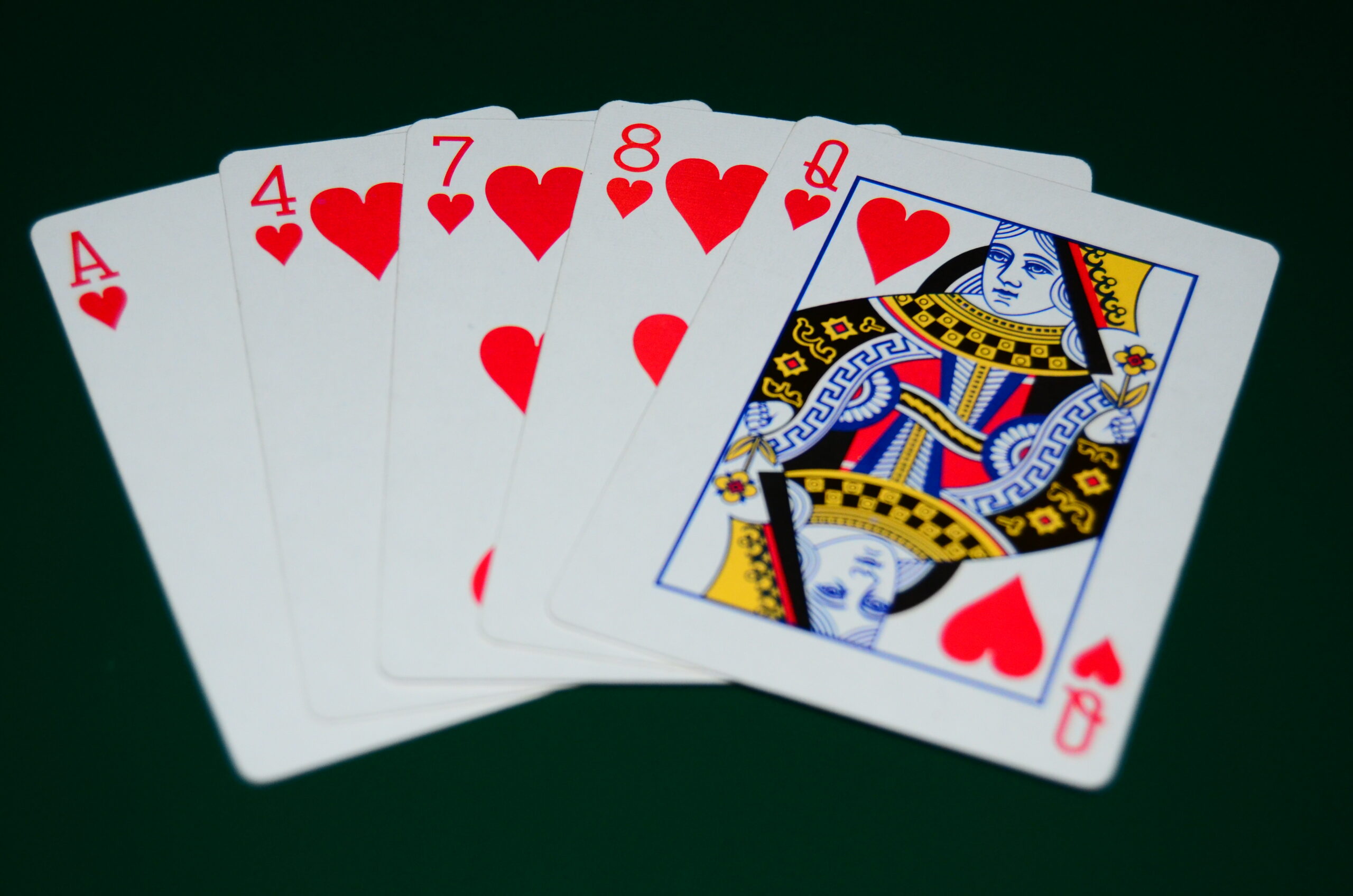
The first time I flopped a flush draw in a live game, I thought I’d basically won the hand already. Four hearts on the board, two in my hand — “I just need one more!” Three streets of calling later, the river bricked, and half my buy-in was gone. I sat there wondering what happened.
What happened was math. A flush draw on the flop has about a 35% chance of getting there by the river — and that’s looking at both remaining cards combined. If you’re only looking at the next card (which is what matters when someone bets the flop), it’s about 19%. I was calling bets that required way more equity than I had.
It took me months of bleeding chips to finally sit down and learn how outs and pot odds actually work together. Here’s everything I wish someone had told me earlier. If you want to check the exact numbers as you read, our poker equity calculator shows your win percentage for any hand or draw.
How many outs does each type of draw have?
Memorize these numbers. Seriously, burn them into your brain:
| Draw Type | Outs | Flop → River (2 cards) | Turn → River (1 card) |
|---|---|---|---|
| Flush Draw | 9 | ~35% | ~19.6% |
| Open-Ended Straight Draw (OESD) | 8 | ~31.5% | ~17.4% |
| Gutshot Straight Draw | 4 | ~16.5% | ~8.7% |
| Combo Draw (Flush + OESD) | 15 | ~54% | ~32.6% |
Quick breakdown:
- Flush draw = 9 outs: 13 cards of each suit minus the 4 you can already see (2 in your hand + 2 on the board) = 9 remaining
- Open-ended straight draw = 8 outs: You need one of two ranks, 4 cards each. Like holding 6-7 on a 5-8-K board — any 4 or any 9 gets you there
- Gutshot = 4 outs: You need one specific rank in the middle. Like holding 6-8 on a 5-9-K board — only a 7 works
- Combo draw = 15 outs: Flush draw plus straight draw simultaneously. This is actually a monster — 54% to get there by the river means you’re a slight favorite over most made hands
There’s a quick mental math shortcut called the “Rule of 2 and 4”: outs × 4 = approximate chance from flop to river, outs × 2 = chance on the next card only. So 9 outs × 4 = 36%, very close to the actual 35%. Good enough for real-time decisions.
When should I chase a draw? Pot odds decide
This is the single most important concept for playing draws correctly: is the price you’re paying to call worth it relative to your chances of hitting?
The formula is simple: if the pot odds are better than your chance of hitting, call. If not, fold.
Real example:
You flop a flush draw (9 outs, ~19% to hit on the turn). The pot is $100, opponent bets $50. You need to call $50 to win $150 (the $100 pot plus their $50 bet).
- Pot odds: $50 / $150 = 33% (you need to win 33% of the time to break even)
- Your equity: ~19%
- 19% < 33% → mathematically a losing call
But wait — what if hitting your flush means you’ll win even more on later streets? That’s “implied odds.” If your opponent has deep stacks and will likely pay off a big bet when the flush completes, the real payoff might be $250 or $300, not just $150. That can tip the math in your favor.
My rules of thumb:
- Flush draw (9 outs): Can usually call a half-pot bet or smaller on the flop
- OESD (8 outs): Similar to flush draw, slightly tighter
- Gutshot (4 outs): Don’t chase unless the pot is already huge or the bet is tiny
- Combo draw (15 outs): Stop thinking about “chasing” — you should be raising with this hand
Semi-bluffing: the most powerful tool for playing draws
Here’s the thing most beginners get wrong about draws: they only play them passively. Check-call, check-call, hope to hit. But the best draw players in the world are aggressive with their draws, and there’s a mathematical reason why.
A semi-bluff is when you bet or raise with a draw — a hand that isn’t the best right now but has a good chance of improving. You win two ways: your opponent folds immediately (you win the pot without hitting), or they call and you hit your draw (you win a bigger pot).
Passive calling only gives you one way to win. Semi-bluffing gives you two. Over thousands of hands, that extra fold equity is worth a fortune.
Best semi-bluff spots:
- You have position: Opponent checks, you bet with your flush draw from the cutoff or button. Most of the time they fold and you take it down
- Wet flop texture: Something like T♠8♠3♥ when you hold A♠5♠. The board screams “draws everywhere” and your opponent can’t be sure you don’t already have a made hand
- Opponent is tight: If you know they fold without top pair, semi-bluff relentlessly. They’re literally giving you money
My favorite hand from last year: I held K♠J♠ on the button, flop came Q♠7♠2♥. I had a flush draw plus a gutshot to the nut straight (K-high flush draw + need a T for a straight = roughly 12 outs). Opponent checked from the big blind, I bet 2/3 pot. He folded. Didn’t even need to hit. But if he’d called? I still had 12 outs with two cards to come — about 45% equity. Either way I was in great shape.
How should I play each type of draw differently?
Flush draws: the most common and most commonly misplayed
Nine outs sounds pretty good. And it is, when played correctly. The problems start when people forget to ask: “If I hit, do I have the best flush?”
Traps to watch for:
- Non-nut flush draws: Holding T♠6♠ for a flush draw? If your opponent also has spades — say A♠K♠ — you both hit and you lose. Always be aware of whether you’re drawing to the nuts. Having the ace of the flush suit is a huge deal
- Three-flush on the flop: If the flop already has three of the same suit and you only have one card of that suit, be very cautious. Someone might already have the flush, and your “draw” is actually dead
- Paired boards: If the flop is Q-Q-7 with two spades, even completing your flush might lose to a full house. Proceed with caution
Open-ended straight draws: watch the direction
Eight outs, can hit on either end. Sounds great. But there’s a subtle trap: the card that completes YOUR straight might give someone else a BIGGER straight.
Example: you hold 7-8, flop is 5-6-9. You need a 4 or a T. If a T comes, making the board 5-6-9-T, anyone holding J-T now has a higher straight. You hit your draw and still lose. This happens more often than you’d think.
So with OESDs, always ask: “If I hit, is it the nut straight?” If yes, play aggressively. If your straight would only be the second-best possible straight, tone it down.
Gutshots: 4 outs is usually not enough
An 8.7% chance to hit on the next card. That’s roughly 1 in 11. In most spots, calling a bet to chase a gutshot is lighting money on fire.
The exception: your gutshot comes with other equity. Maybe you have A♠T♠ on a K♠8♣6♠ board — that’s a gutshot (need a J) PLUS a flush draw PLUS overcards. Those extra outs make it a totally different hand. But a naked gutshot with nothing else? Just fold. I used to convince myself “I just need one card!” Yeah, one specific card that shows up 8.7% of the time. No thanks.
Combo draws: you’re actually the favorite
Flush draw + open-ended straight draw = 15 outs = 54% to hit by the river. That’s MORE than half. Against top pair, you’re actually a slight mathematical favorite.
This means combo draws should not be played passively. Raise on the flop. You want to build the pot because you’re more likely to win it than your opponent is. If they fold, great. If they call, even better — you’re getting money in with the best of it.
5 mistakes that cost beginners the most money with draws
Chasing every draw without checking pot odds
The single most expensive habit I had. See four to a flush? Call. See four to a straight? Call. Didn’t matter if the bet was quarter pot or full pot. The math was different every time but I treated it the same way. Don’t be me. Spend 30 seconds learning the Rule of 2 and 4, and actually use it before clicking that call button.
Drawing to non-nut hands
Chasing a flush with 6♠3♠? Cool, you hit your flush. It’s a 6-high flush. Opponent shows A♠K♠. Congratulations, you just lost your stack on a hand where you were “drawing” the whole time and still ended up second best. Always know where your draw ranks. If you don’t have the ace of the suit, your flush draw is worth less than you think.
Never semi-bluffing
If you only play draws by check-calling, you’re leaving money on the table every single session. Semi-bluffing gives you fold equity on top of your draw equity. Two ways to win instead of one. Once I started betting my draws instead of just calling, my win rate went up noticeably — and it wasn’t because I was hitting more often.
Calling the turn after missing, because “I already invested so much”
Classic sunk cost fallacy. You called a flop bet with your flush draw. Turn bricks. Opponent fires again, bigger this time. “Well, I’ve already put in $80, can’t give up now…” Yes you can. Your equity just dropped from 35% to 19%, but the bet you’re facing probably got larger. The math is worse on every dimension. Fold and save those chips for a spot where the numbers actually work.
Betting tiny when you finally hit
You chased for two streets, the river finally brings your flush, and you… bet 1/4 pot? Why? The hands that will call a small bet will also call a larger one. The hands that won’t call anything won’t call your 1/4 pot either. When you hit your draw after a chase, bet 60-80% pot. Make them pay for the privilege of seeing your hand. You earned it.
Common Questions
Is a flush draw better than a straight draw?
Slightly. A flush draw has 9 outs vs 8 for an open-ended straight draw, and a flush also beats a straight in hand rankings. But the difference is small. What matters more is whether you’re drawing to the nuts and whether the pot odds justify continuing.
What’s a “backdoor draw” and should I care about it?
A backdoor draw needs runner-runner — both the turn AND river need to cooperate. Like having three to a flush on the flop instead of four. On its own, a backdoor draw isn’t worth chasing. But as extra equity on top of another hand (like top pair plus a backdoor flush draw), it adds real value. Think of it as a bonus, not a primary plan.
Does playing draws change in multiway pots?
Yes, in two important ways. The direct pot odds are usually better in multiway pots (bigger pot relative to the bet), but semi-bluffing becomes much less effective (harder to get three players to fold than one). So in multiway pots, play draws more passively — call when the price is right, save the aggression for heads-up situations.
What if my opponent is also on a draw?
If you suspect they’re drawing to a different suit, it doesn’t affect your outs at all. But if they might have a higher flush draw of the same suit (you have T-high, they could have A-high), your flush draw is worth significantly less because even hitting it might not win. In those spots, unless you have additional equity like a straight draw or pair, don’t over-invest.