Daniel Negreanu Wins His 8th WSOP Bracelet ($100K PLO High Roller)
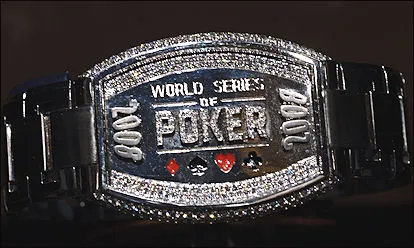
On July 2, 2026, Daniel Negreanu won the 2026 WSOP Event #76 — the $100,000 Pot-Limit Omaha High Roller — for $2,257,718 and his 8th career WSOP bracelet. It’s one of the biggest PLO scores of his career, and it says a lot about where high-stakes poker is heading.
What actually happened?
I’ll be honest — when I saw Daniel Negreanu had another bracelet, my first thought was “how is this guy still winning?” On July 2, 2026, he took down WSOP Event #76, the $100,000 buy-in Pot-Limit Omaha High Roller, for $2,257,718. That pushes his WSOP bracelet count to 8.
The final table was absolutely stacked. Artur Martirosian finished runner-up for $1,477,434, Chris Frank took third for $1,002,107, and the rest of the podium went Philip Sternheimer ($705,448), Yosuke Miki ($516,160) and Sean Winter ($393,139). Even Jeremy Ausmus, a fixture in these super-high-roller fields, could only manage 8th for $259,047. Beating a lineup like that isn’t luck — it’s a statement.
I read the official WSOP report, and for a guy who has basically won everything already, this $100K PLO bracelet might matter more than people assume. A six-figure buy-in means the field is tiny and razor-sharp — there are no soft spots to farm, no amateurs punting off stacks. Every pot is against someone who does this for a living. Winning one of these is a completely different animal from grinding a big-field $1,500 event, and it’s why the money jumps are so brutal: second place still banked nearly $1.48 million and probably didn’t sleep well that night.
What does this mean for us regular players?
Here’s the part I find most interesting: this bracelet came in PLO, not Hold’em. That’s not a coincidence.
High-stakes poker has been drifting toward Omaha for years now. The reason is simple — No-Limit Hold’em has been solved to death. The edges between elite players keep shrinking, and the money gets harder to win. PLO, on the other hand, has more variables, pots that balloon fast, and equities that swing wildly street to street. That leaves far more room for reads, hand-reading and pot control — exactly the all-around skills an old-school pro like Negreanu lives on.
If you’ve never played much Omaha, the thing that breaks your brain at first is how close the equities run. In Hold’em, a big hand pre-flop is often a huge favorite. In PLO, even a premium double-suited holding is rarely more than a small favorite against a reasonable range, and “the nuts” on the flop can be drawing thin by the river because so many turn and river cards change everything. That’s why disciplined PLO players obsess over redraws — it’s not enough to have the current best hand, you want to have the best hand AND the best draw to an even better one.
What’s the takeaway for the rest of us? I’ve been grinding low-stakes PLO on and off for a couple of years, and the biggest lesson is this: don’t bring your Hold’em instincts to Omaha. Two pair is often a strong hand in Hold’em; in PLO it’s frequently a trap, because four hole cards make it much easier for someone to have a bigger made hand. Bare top set with no redraw is a hand you have to be willing to fold on a wet board — something that feels borderline insane the first time you do it. Negreanu winning at the $100K level isn’t about running hot; it’s about having that “equity shifts every street” instinct wired into his brain.
If you want to move toward Omaha, my advice is to start at low-stakes cash and build one habit before anything else: only commit a big stack with the nuts, or a monster draw to the nuts. Master that discipline and you’ll already be beating most of the players at your level, because the average low-stakes Omaha player overvalues non-nut hands constantly.
My take on it
Personally, I genuinely respect this one. Not because of the money — $2,257,718 is roughly a single session for the regulars in this field — but because at his age, in an era where poker has been ground down by solvers and young prodigies, he can still sit at a $100K PLO final table and beat a room full of killers.
That said, let me be the one to pour some cold water: bracelet number 8 versus number 6 doesn’t really change how we’ll remember Negreanu. He’s been a Hall-of-Famer for a long time, and one more piece of jewelry doesn’t move that needle much. What actually excites me is the bigger signal. Ten years ago, the marquee events everyone talked about were No-Limit Hold’em. Over the last several seasons, the biggest buy-ins have quietly tilted toward PLO and mixed games, because that’s where the remaining edges live. Negreanu — a guy who built his name reading souls across a Hold’em table — adapting and winning at $100K PLO is almost a perfect symbol of that shift.
My bet is that over the next couple of years, Omaha variants keep taking a bigger share of the WSOP’s biggest buy-ins, and we see more “Hold’em legends” reinventing themselves as Omaha players to stay relevant at the top. I could be completely wrong — maybe some solver breakthrough makes NLHE fashionable again at the high end — but that’s how I’m reading it right now. We’ll find out when next year’s schedule drops.
Poker involves financial risk — play responsibly.
How many WSOP bracelets does Negreanu have now?
Which bracelet number was this for Negreanu?
His 8th, won in 2026 WSOP Event #76, the $100,000 Pot-Limit Omaha High Roller.
How much did he win?
$2,257,718 for first place — one of the biggest PLO scores of his career.
Who else made the final table?
Artur Martirosian was runner-up ($1,477,434), Chris Frank took third ($1,002,107), followed by Philip Sternheimer, Yosuke Miki, Sean Winter and Jeremy Ausmus.
Why PLO and not Hold’em?
High-stakes poker keeps shifting toward Omaha. NLHE edges have shrunk as the game got solved; PLO has more variables and swingier equities, which rewards all-around veterans.
What can a regular player learn from this?
Don’t play PLO on Hold’em instincts. Hands like two pair are often traps in Omaha. Start at low stakes and build nut-and-redraw discipline first.
Source: WSOP.com official report